
On the Wildside: A kestrel for a knave?
One of our most well-known birds of prey is the small falcon, the kestrel. This was the bird which came to stardom in the 1969 film set in Barnsley, ‘Kes: A kestrel for a knave’. The title derives from the fact that in medieval England, this the only hawking bird that a knave (male servant, or man of low class) was legally allowed to keep. Other hawks, eagles, and falcons were reserved to those of higher status.
David Jane who lives close to Totley Rise in Sheffield emailed me a question and a selection of photographs taken through the window of his flat. The question was ‘How common are kestrels in urban situations?’ The simple answer is they are not so common and have in fact declined somewhat in recent decades. Kestrel was the bird of prey that did relatively well in the 1960s and 1970s when others plummeted because of persecution and pesticide impacts.
They appeared to avoid the worst of DDT pollution and benefitted from the spread of motorway verges combined with lack of competition from other birds of prey like common buzzards and peregrines. Both these will kill kestrels and compete for territories and in recent years have increased so perhaps as a consequence, kestrels have reduced. There may also be competition from sparrowhawks which have increased dramatically.
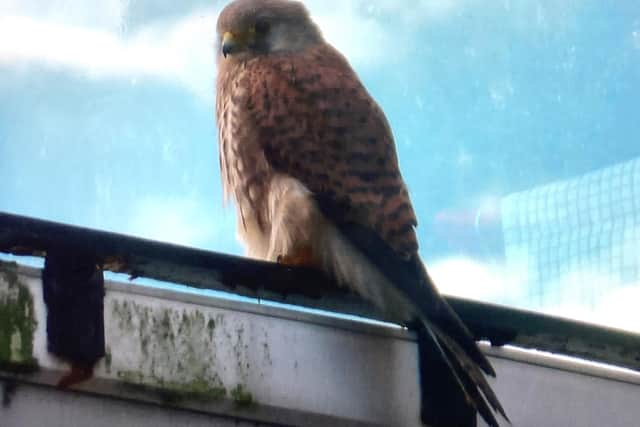
Nevertheless, David now has a pair of kestrels visiting the balcony of his apartment and roosting and now nesting close by. He has been able to observe their hunting, feeding, and mating as they established their breeding site. The food brought to the balcony to consume seems to include a good number of wood mice, though kestrels will also take small birds and even insects. He is eagerly waiting to see if a brood of young kestrels will soon appear. The bird pictured is the male with his rufous or copper-coloured back and wings, grey head, and black moustache. The female is brown overall with dark speckles and bars, plus a paler moustache. Their legs and feet are bright yellow and sport sharp talons.

Professor Ian D. Rotherham, researcher, writer & broadcaster on wildlife & environmental issues, is contactable on [email protected]; follow Ian’s blog (https://ianswalkonthewildside.wordpress.com/) and Twitter @IanThewildside