
On the Wildside: A cold snap stirs and mixes the local birdlife
A recent spell of cold, frosty weather quickly impacted upon local birdlife. Icy ground makes life hard for birds accessing food and drinking water. This harsh weather affects bird behaviour driven by the twin needs of keeping warm and eating enough food to survive. Conditions also influence the species in and around the area.
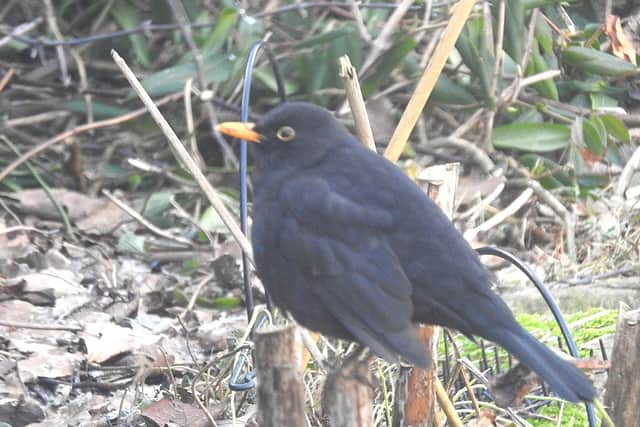
The variety of birds coming to feed in local gardens changes with bitterly cold, wintry conditions. Species like blackbirds have been largely absent from gardens and parks during recent months but in the past couple of weeks they returned. In the garden there have been up to three males, all dark, glossy black plumage and with shining, bright, yellow beaks and eye-rings. These have been joined by a couple of females which are mostly dull, dark, brown. I suspect these are migrant birds because they seem to be quite settled in a group, whereas the locally breeding birds are already territorial and rather aggressive towards incomers. In nearby woodlands the mistle thrushes have been singing loudly from the treetops where they manage to stay discretely out of sight. The colder weather has quietened them at least for now. Occasional redwings from Scandinavia can be heard moving over at nighttime, their soft flight-calls very distinctive. I spotted a single bird apparently down to roost in a small tree in my local park, Graves Park.

Also, in the late afternoon during cold weather I noticed how wrens were busily and urgently searching for safe, warm roosting places. In the park, they were investigating dense, overhanging ivy in a diligent search for a good spot to shelter overnight. These small birds will roost communally so that as a group they share their precious body warmth. In the wildlife garden, at least one wren was trying out a bird nesting-box as a secure place to stay overnight. There may have been more than one individual, but it was too cold to stand stationary and count the birds in. I have heard of up to 16 tiny wrens in a single nest-box!
Professor Ian D. Rotherham, researcher, writer & broadcaster on wildlife & environmental issues, is contactable on [email protected]; follow Ian’s blog (https://ianswalkonthewildside.wordpress.com/) and Twitter @IanThewildside