
Northern Lights: We need a memorial to Joan Maynard, Sheffield’s pioneering MP
Sheffield prides itself on being a city of changers and doers. Ours is a city rich in political history and in people who have organised to change it. Yet one leading figure of the labour movement remains too little recognised in the city she served.
Joan Maynard, Member of Parliament for Sheffield Brightside from 1974 to 1987, was the first woman elected to represent Sheffield in Parliament. That alone should mark her out as someone Sheffield remembers publicly. But Maynard’s legacy runs far deeper than that historic first.
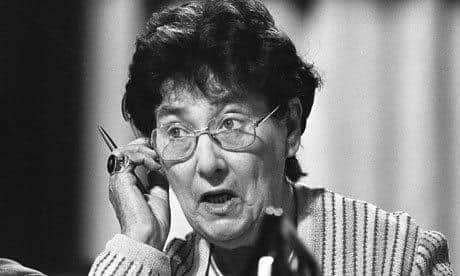

Before entering Parliament, Maynard had already made her mark as an organiser with the National Union of Agricultural Workers, later serving as its Vice-President. She led campaigns for land justice and exposed the poor pay and precarity agricultural workers lived with. Hers was a politics grounded in the belief that working-class people deserved dignity, security, and justice wherever they lived, in city and countryside alike.
She carried that commitment into Parliament, where she played a central role in the campaign to dismantle the feudal tied-cottage system. Under that system, agricultural workers were forced to live on their employers’ land, leaving them vulnerable to homelessness if they lost their jobs or challenged their bosses. Maynard’s efforts as a newly elected MP helped secure the 1976 Rent (Agriculture) Act, giving farmworkers secure tenancy rights and ending one of the most exploitative arrangements in rural Britain.
It is difficult now to convey the scale of that change. Until then, an argument with a landowner one evening could mean a whole family’s eviction by the following morning. By helping end the tied cottage system, Maynard removed one of the mechanisms that had kept farmworkers trapped in dependence and poverty.
One letter Joan received after the Act passed, signed by ‘one of the old plough boys’, captures what that change meant in practice. It said that ‘many will sleep sounder from now on and will no longer be trodden on as in the past. At last the black cloud has been brushed aside forever.’
But it is not only Maynard’s achievements as a campaigning MP that deserve commemoration. Her values and their relevance today do as well.
One of the most distinctive features of our city is that it is both urban and rural: a city of steelworks and terraced streets set against farmland, reservoirs, and moors. Crosspool, in my ward, is known locally as the gateway to the Peak District National Park. We are fortunate that a large post-industrial city like ours still has such abundant green space, something that campaigners today rightly remind us to protect.
Maynard’s vision for the countryside wasn’t a conservative one. It was as much about change as it was about continuity.
She wanted land to be held more democratically, under public ownership rather than in the hands of ‘the faceless landlords, the investment trusts, the insurance companies and the other speculators.’ She also wanted to change the way it was used: in some of her final Commons interventions, Maynard called for less intensive farming, reduced chemical use, and action on the pollution of our rivers. She also condemned the misuse of our countryside as a ‘playground for the rich’, attacking the hunting and shooting that degrade our natural environment.
The struggles she waged half a century ago still resonate today. As our city changes, and as we try balance the demands of a growing city with the need to increase biodiversity and access to nature, we should to the values and principles Maynard set out then.
Yet walk through Sheffield today and you will struggle to find any public recognition of her. A city that rightly celebrates both its history and its status as the Outdoor City, has left its first woman MP and rural champion largely unmemorialised. That should change.
More than fifty years on from her election to Parliament, Sheffield should publicly commemorate Maynard’s contribution to city and country. I am calling for the city to permanent mark Joan’s work and life in the city centre, whether through a statue or remaining a civic space, to serve as a reminder of what she stood for and achieved for all of us.
Such a memorial would also say something about the kind of city we want to be: Sheffield has always taken pride in its radical traditions, and we should be confident enough to celebrate those who stood firmly within them. When someone has done as much for working-class people as Joan did, it is only right that her story is visible in the city she served.
We need a memorial to Joan, Sheffield’s pioneering MP.