
Northern Lights: Sheffield’s Climate Bond is now live: join in
Last week, Sheffield City Council launched a new climate bond that invites people in this city and beyond to take climate action into their own hands, while earning a return on their investment. Here’s what it means for you.
This began last year when the council voted to create a climate bond that would allow anyone play a direct role in driving climate action.

Climate bonds let people invest their money – from as little as £5 – to support projects that improve our neighbourhoods while cutting carbon emissions.
Some proposals already on the table include putting solar panels on more schools and businesses, making homes more energy efficient, expanding electric vehicle charging points, and boosting biodiversity in our parks and green spaces.

Other councils that have tested climate bonds have raised millions to build wind turbines, plant street trees, install solar panels on council buildings, and even strengthen flood defences.
But what makes the approach so exciting is not just the money it brings in, or even what it will be spent on, but the shift in power it represents: funding comes from local people, and the benefits are directly felt in their own areas.
The reason bonds work – how they can give people a return on their investment – is because they help the council to deliver projects more cheaply than it might otherwise be able to. Community investment is cheaper than taking out a traditional loan with high interest rates.
That saving is what lets the council pay back investors with interest. It is a rare example of a financial model that works for the public rather than extracting from it.
And rather than any interest being paid to a bank or private lender, it is kept within our communities, achieving far more good than it otherwise might.
Importantly, even the idea to have a Sheffield climate bond came directly from Sheffielders in the first place.
In 2021, in the run-up to the COP26 UN Climate Summit, Olivia Blake MP held a series of monthly climate assemblies where residents set out how they wanted the climate crisis to be addressed.
People came to these assemblies and shared the climate action they wanted to see at a local, national and international level.
At one of these assemblies, residents came together to discuss how more climate action should be funded, and agreed upon the idea of green investment bonds.
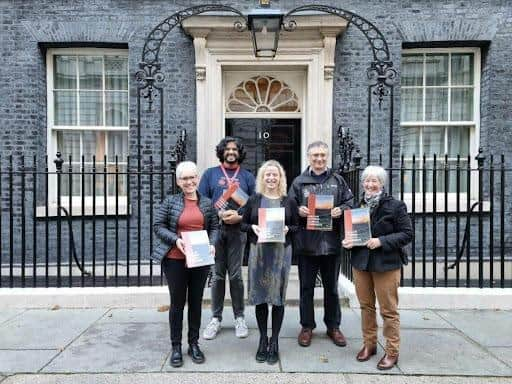
The Hallam Citizens’ Climate Manifesto, which Blake published in the aftermath of the assemblies, calls for green investment bonds so that Sheffield ‘can raise funds locally to pay for our own transition.’
A few years on, and the Sheffield climate bond has become a reality.
This is what democratic climate action looks like. It means creating structures that let communities shape the transition, see tangible benefits from it, and hold power over it.
Ultimately, the entire purpose of local government should be to give power and agency to local communities.
Councils shouldn’t just deliver services to people, but work with them and shaped by their priorities.
Climate bonds are a great way to bring that mission back into focus, by giving people a direct say in how public money is spent. Their impact could even go beyond helping to decarbonise our city: they can help democratise it and put real power into the hands of local people.
If you want to see more climate action locally, now is the time to get involved. Invest today, and help to build a fairer, greener city for us all. Read more at: https://www.abundanceinvestment.com/council/sheffield
Minesh Parekh is a Labour and Co-operative Councillor for Crookes and Crosspool