
Northern Lights: My hope is that everyone will be willing to play their part, big or small
Five years ago, literally just after the lockdown had begun, two very strange opposites occurred.
We had Boris Johnson, as Prime Minister, telling people that we “must stay at home"; yet, conversely, we had a real commitment to volunteering – which particularly grew as the vaccine became available.

Street and neighbourhood groups were organised: some to help look after the most vulnerable; some just about keeping in touch, and WhatsApp groups were created to join with others on the street to celebrate a birthday or wedding anniversary – all, of course, at a distance.
At the end of March 2020, I left London very late.
I had taken part in the very final days of the debate on emergency covid legislation which had been rushed through both Houses of Parliament.
In the House of Lords, I warned against overbearing and too much top-down legally enforceable restrictions.
I found myself, frighteningly, alongside some from the political right– although I certainly didn't join the conspiracy theorists or any of the anti-vax nonsense.
What did strike me, however, was that if people weren't even to be allowed to properly socialise outside in the fresh air, whilst keeping a reasonable distance, we were all going to do our heads in.
Some of that undoubtedly happened. Schools were substantially closed and universities went online.
The Covid legacy (different to Long Covid) appears to have affected Britain far more than elsewhere, and, consequently, we have to ask ourselves some questions.
If we had taken common-sense and responsible public health measures, but not overdone it, would we be in a better place?
My answer is yes. Of course, where possible, it was sensible for people to work from home or be furloughed, given that travelling on public transport would likely spread the virus.
Forgoing major public gatherings just made sense. But for how long such measures needed to be in place is another matter.
This is where I was at odds with the leadership of my own Party, who – for perfectly reasonable scientific justifications given that the "experts" were constantly calling for even longer and deeper lockdowns – felt it politically rational to discount all the other likely knock-on consequences, and stick purely to the infection orthodoxy.
Here we are, five years on, with the most staggering figures in relation to various forms of mental ill-health, particularly amongst young people, and a welfare bill projected to go up by 50% in the next six years.
Leaving aside very interesting reflections that are coming through, not least from a recent book by Professor Suzanne O’Sullivan on the over-prescription and medicalisation of our various ailments, what else could have contributed to the British malaise?
Professor Claudine Bowyer-Crane is an expert at Sheffield University on early years.
Her reflections on the reduction in socialisation, and the impact this had is both worrying and instructive.
Just the tip of the iceberg in terms of what happened to young people all through school, college and into the potential for work, as well as higher education.
My personal view is that I think that we are still suffering from the effects of austerity. Of deep and damaging cuts – not just to essential services, including the underfunding of the health service, but also to the elements which make up a civilised society, and which affect our overall well-being.
That is why, on the back of the Chancellor of the Exchequer's spring statement last week, I am so deeply opposed to Treasury orthodoxy and to the legacy of monetarists who reject the proven doctrine of John Maynard Keynes: that when the economy is in trouble you borrow and invest, and by doing so you get the growth that allows the payback on both debt and the ongoing cost of public services.
In Sheffield, we have, from time to time, tried raising bonds for particular projects.
I remember contributing to one long before we embraced the net zero agenda to begin "greening" our city.
Perhaps here in Sheffield and South Yorkshire, we could think once again about raising a bond which will allow us to do a little of that investment on a very small scale, but in a way that would, as we did way back in the 1980s, keep up the morale and motivation of the people of this great city.
My message to Keir Starmer, Rachel Reeves and my colleagues in central Government is very simple. Austerity is austerity, whoever is implementing it.
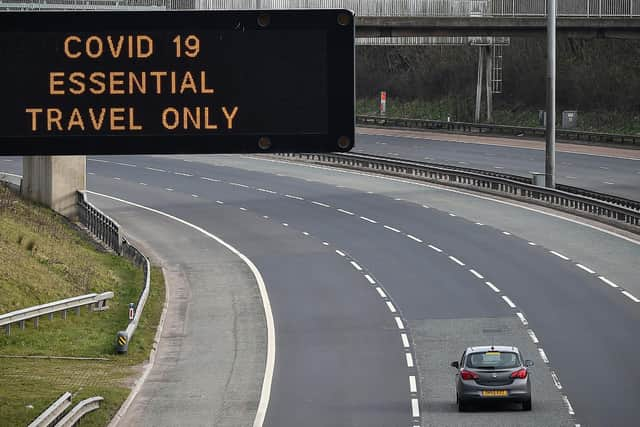
So, back to April 2020 – when the birds sang, the air was cleaner, and traffic ground to a standstill - the willingness of people to come together and work together, and later volunteer for the vaccine roll-out, was a phenomenal example of self-help.
Of course, it is extremely difficult, outside Whitehall, to have the kind of impact that would really make a difference to the future of our economy, but that shouldn’t stop us from thinking about the contribution that can be made here in Sheffield and South Yorkshire.
Developing the skills we need through the office of the Elected Mayor and the Combined Authority, together with the talent in our businesses and education institutions, we could, and must, think creatively.
I know that the leader of Sheffield City Council, Tom Hunt, is ambitious in driving this forward in the months and years ahead, and my hope is that everyone will be willing to play their part, big or small.