
Northern Lights: Is banning swords saving lives?
In a bid to reduce knife crime the government have announced that they are banning another bladed article this year; Ninja Sword. This comes a year after the Zombie knife and Zombie machete was banned.
At first, I thought that ninja swords and samurai sords, were the same and I was confused as Samurai swords and other curved swords with a blade length of 50cm or longer were banned in April 2008, with the exceptions for registered martial artists, re-enactors and even certain genuine Japanese swords.
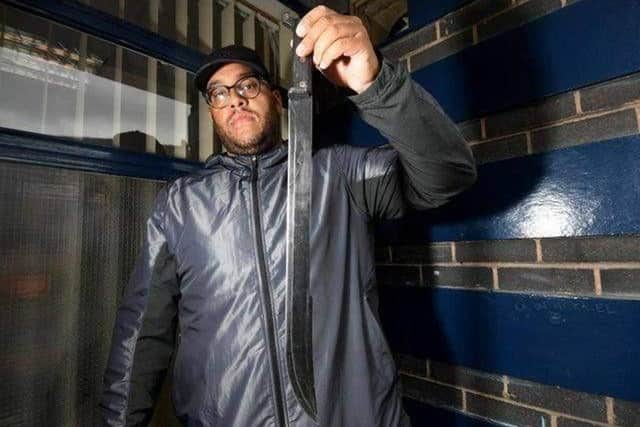

Unfortunately, in August 2008 there was an amendment that was passed allowing for Samurai swords and other curved swords which are handmade, using traditional forging/production methods to be sold without a license.
Samurai swords and other curved swords with a blade of 50cm or more may be imported if they are:
* made before 1954
* made by traditional hand sword making methods
* only available for the purposes of religious ceremonies or for martial arts
* for use in a historical re-enactments or sporting activity for example a martial arts demonstration for which public liability insurance is held
Upon further research, ninja swords are a shorter version of the traditional curved samurai sword with blades being 50cm or shorter.
Sadly, ninja swords don’t fall under the umbrella of samurai swords and can still be manufactured and sold until August.
Of course, this is a positive step in fighting knife crime as such weapons should be harder to obtain, but I keep finding myself asking why on earth are they taking so long?
One banned weapon per year is not enough for deadly styles of blades, what about swords?
Rambo knives and machetes? will we have to wait another three years for them to be banned as well?
In my opinion, banning weapons receives the most kudos and media headlines for very little effort.
But it made me think, why are knives the problem when it comes to knife crime?
When people use vehicles as weapons, we don’t stop the manufacturer of the car, we hold the person driving it fully responsible.
We need to bear this in mind when looking at making positive change to knife crime.
I have and will continue to say, a knife is an object.
It has no thoughts or feelings, cannot move by itself or make decisions.
Its purpose is totally in the hands of the person that is handling it, so how can a knife be a fault?
In most cases, knives are used as tools; in a kitchen for preparing food; tree felling; in the woods for bushcraft.
It is only a small percentage of the time that knives are carried to be used as a weapon.
So why are the knives seen as the problem in knife crime, when its obviously the person that is carrying the knife.
There are many reasons why people carry knives, some of the more obvious reasons are, for protection or to feel respected.
Whatever the reason, education on this subject is a must, as children are ruining their lives because they don’t understand the devastation that their actions can have.
For those that are at high risk of knife crime, education around positive decision making, the impact and consequences of knife crime is paramount.
The amount of young people I speak with who only believe that using a knife is illegal but carrying it is fine as long as it is not used, is extremely concerning.
Others believe that it is legal to carry a knife and use it, if it is to protect yourself.
The list of these worrying examples goes on.
I also believe that all children from the ages of eight should be educated about conflict resolution and de-escalation techniques.
The reasoning behind this is, because conflict is normal, it is how it is dealt with which comes with problems.
As a child, you’re told to either fight or walk away.
Neither method manages conflict positively as the former may lead to violence while the latter lacks closure to the conflict.
Conflict resolution and de-escalation techniques are life skills that are fundamental for fighting knife crime, as knife crime is an act of violence, which, for the most part is born from conflict.
By teaching children these skills at a young age, it will serve as a solid foundation for them to build on as they grow older.
I am fully aware that education alone will not reduce knife crime as a whole, but once delivered in a layered approach with other services and preventions, we will start to see a positive change in the fight against this epidemic that this country has: knife crime has already taken more innocent lives, destroyed enough families and taken the life out of enough communities.
Enough is too much, we must come together to halt things in the first instance.
- RELATED: 'Time to let charity cancer vehicles in Sheffield's bus lanes'
- RELATED: 'Sheffield's hospital repair bill is a failure of government' - opinion
- RELATED: Sheffield's best bits: City resident Darcie Peskir has her say
- RELATED: I visited Land of Lights which is back at Gulliver’s Valley for second year