
Iconic cormorant is a good and bad omen, says Sheffield wildlife expert
I couldn’t resist this picture, which reminded me of Douglas Adams’ fourth book in the Hitchhiker’s series.
The book title, So long and thanks for all the fish, is the farewell message as the dolphins leave planet Earth – I know the feeling, but that is a different matter.
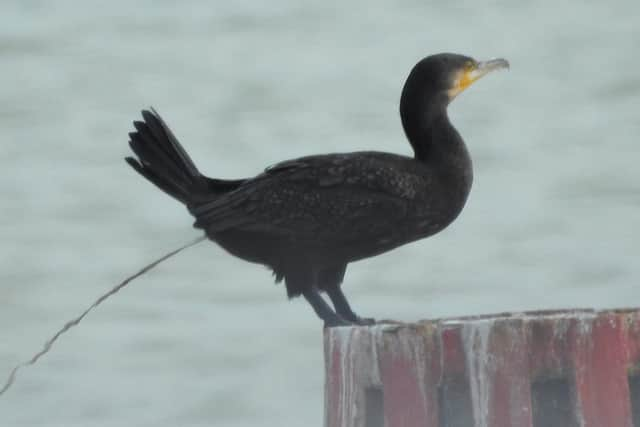

Anyway, the cormorant is one of our predatory birds and which has done well in recent decades, returning to many inland waters and rivers along with its coastal habitats – this one was photographed on the coast at Bexhill, East Sussex.
I always think cormorants and their smaller cousins, the shags, have something prehistoric in their appearance and they are one of the ultimate fisher-birds.
We tend to notice them because of their habit and indeed need, to sit out in open places and spread their wings to dry.
This again enhances their appearance as something wild, untamed, and in times past, regarded with suspicion as augurs of bad luck.
Although cormorants do have special oil-glands to produce a secretion to waterproof their feathers, they still need to dry them after fishing.
This typical and visible posture of cormorants has led to them figuring strongly in folklore and superstition.
They were used in heraldry and medieval ornamentation, for example, and often with the wing-drying pose.
This had various interpretations such as representing the Christian cross on which Christ was crucified, and through this, symbolizing nobility of spirit and sacrifice.
For poet John Milton writing Paradise Lost, the cormorant was associated with greed and perched on top of the ‘Tree of Life’ for example.
The Devil adopted the form of a cormorant to spy on Adam and Eve during his first excursion into the Garden of Eden.
Not all people viewed cormorants with suspicion and Scandinavian seafarers considered them good omens.
Nordic tradition suggested the spirits of those lost at sea came back disguised as cormorants to visit their loved ones at home.
Perhaps derived from Viking settlers, Liverpool’s iconic ‘liver bird’ is a cross between an eagle and a cormorant.