
Fundraising: Why Christmas giving matters for Sheffield Children’s
As festive lights sparkle across our city, I’m reminded every day why this season means so much at Sheffield Children’s. Christmas is a time for giving, and there’s no greater gift than helping a child see a brighter future.
One patient whose story stays with me is Charlotte’s. When she was just four-years-old, what began as pain in her arm soon became a life-changing diagnosis: juvenile idiopathic arthritis (JIA). Children with JIA are at risk of developing uveitis, a condition in which the eye becomes inflamed and which often goes unnoticed by parents and carers. Unlike in adults, uveitis in children can damage their eyes silently without any obvious symptoms and, if untreated, can lead to permanent vision loss.
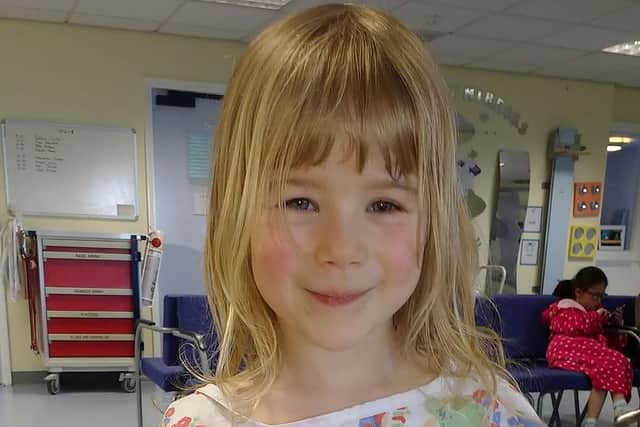

For Charlotte, a routine eye check alongside her arthritis treatment revealed severe uveitis in both eyes. However, thanks to our specialist team’s rapid intervention, intensive treatment and surgery, Charlotte has almost perfect vision today.
To diagnose uveitis, we are developing a research project that uses a specialist camera built specifically to take ultra-high-resolution pictures in the front chamber of the eye, called an Anterior Segment Optical Coherence Tomography (ASOCT). Some ASOCT systems can take up to 256 images of a human eye’s front chamber in just 8.7 seconds. When both eyes are scanned, a total of 512 photos will need to be carefully analysed by a team of clinical scientists, which is time-consuming.
My project, with funding from Sheffield Children’s Hospital Charity, will explore the benefits of using ASOCT to detect inflammation inside the eye, comparing results with an ophthalmologist and an eye specialist to determine whether uveitis is present and, importantly, to monitor the treatment response in children and young people having complex immunosuppressant treatment.
In the future, we aim to incorporate a form of artificial intelligence (AI), alongside the ASOCT machine, to enable earlier and more effective detection of uveitis, potentially even before changes are clinically apparent to the eye specialist. If successful, I hope this approach could eventually be rolled out for routine clinical use in other centres across the UK, as well as local high street opticians, enabling monitoring and detection to take place in the community, closer to the child and their carer’s home. This would help us detect uveitis earlier and treat it quicker, ultimately preventing children from losing their sight.
This Christmas, I invite you to support Sheffield Children’s Hospital Charity’s Christmas appeal. Your donations will fund vital research, like mine, that will help shape the future of children’s healthcare. Visit sheffieldchildrens.org/christmas-appeal to make a donation.
Thank you.