
Celebrate more than 1,000 years of history
A hunting ground for deer and hare, an open air theatre, medieval fishponds, ancient farms and meadows. The work carried out by hundreds of archivists, ecologists and volunteers over the last few years has uncovered centuries of historical clues scattered around Graves Park.
The second Digging Deeper for All project, funded by a £142,700 grant from the National Lottery Heritage Fund, has gathered a wealth of information, much still to be analysed and interpreted, said Caroline Dewar from the Friends of Graves Park.

“There’s over a thousand years of history here, it’s not just a wonderful place to visit and wander around.”
Project partners South Yorkshire Biodiversity Research Group (SYBRG) and Sheffield council have now designed and printed a set of new information boards, after consultation with Friends of Graves Park. The aim is to help visitors learn about the new research. Most are in place already.

There’ll be new welcome boards at seven park entrances along with information signs at particular sites. For example, by the Cobnar Road sports pavilion is a new sign detailing the history of Bole Hill Farm and hamlet.
Christine Handley from South Yorkshire Biodiversity Research Group explained how busy the hamlet would once have been, as a staging post on a primary route out of Sheffield.
“This would be the main road to London. The farmer could come and stand here and watch the traffic,” she said. In those days, traffic would have been horses and carts, she added.
The old London Road is still visible, as a sunken stretch of ground bordered by old trees. The route came up Derbyshire Lane, stretched through the park, and then continued through Little Norton and along Dyche Lane, where a 400 year old oak tree still marks the route.

The road was replaced with the new Chesterfield Road in the late 1700s, said Christine, not least since the new owner of Norton Hall (and most of the park) didn’t like the sight of traffic on his grounds.
Caroline said she recently met a group of women from Stannington arriving at the park for the first time, who said they were delighted to find the new noticeboard telling them about the old road, and the history of lead smelting near Bolehill Farm. (The term ‘bole hill’, common across Sheffield and Derbyshire, refers to a lead smelting site).
The new information boards are seen as the best way to introduce visitors to the park’s history, despite the modern idea that most people only want to gather information via their smartphones.
“People come to the park as a destination,” said Caroline Dewar, adding that many are in organised parties, like walking groups.

“They’re not going to be glued to their phones, people are looking for something in situ to enhance the experience. Most people don’t know about the history here, so they’ll only be able to check on something if they know there’s something to look for.”
Designed by Kate Beaumont and Christine Handley from SYBRG and made by the council, the new information boards replace old signs put up eight years ago, with a new design to make the most of all the recent findings.
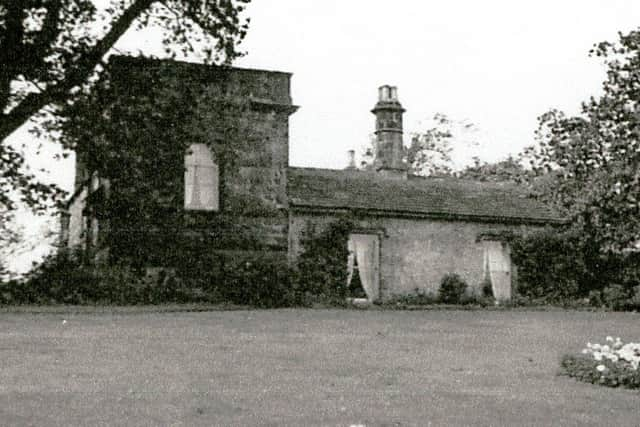
They cover wildlife and biodiversity, as well as the site’s history. By the playground and Rose Garden Cafe, you can learn about the old demolished summer house and its 300 year old oak tree, and see part of a map of the area uncovered in Sheffield Archives, from 1741.
You could imagine the landowner’s staff looking out for game in the deer park below for the hunters coming from the big house. What would they see from here in those days? asked Christine.
More recently the park keepers would ring a bell from the summer house site at dusk to warn the public the park would soon be closing.
And down by the park’s lakes, visitors can learn about the waterfowl now living on the three lakes, and imagine life around the medieval fishponds.
There’s still plenty more history to uncover at Sheffield’s biggest park, and now the thousands of visitors can learn and start asking questions too.