
On the Wildside: Close encounters of the robins kind can help keep us connected
Being at one with nature, connecting through encounters or closeness is recognised as beneficial for health and wellbeing. Indeed, I suggest such nature connectedness is vital to mental health, and disconnection within the modern world is hugely damaging.
I find it frustrating and very surprising that we don’t do more to provide better access to nature for those who have limited opportunities in the ‘great outdoors’ (for reasons of health, age, mobility etc). In particular, people in ‘end of life’ care often want the simple pleasures associated with touching nature.

As Shakespeare wrote, in Troilus and Cressida, ‘One Touch of Nature Makes the Whole World Kin’, and indeed it brings people together helping make us one with nature and with life. I tried to convince various local organisations involved with end of life care, of the benefits to be gained by improving the quality of life extended through nature connection rather than merely managing the process. But this pretty much fell on deaf ears.
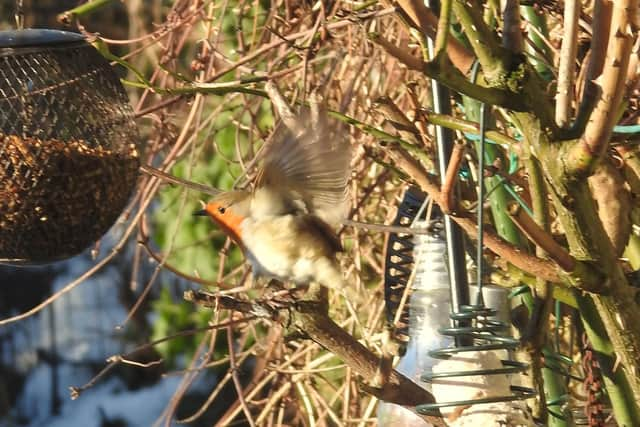
So, for example, simple contact with say a robin, gives us great joy and pleasure and even improves our state of mind, our wellbeing. This might be in a local parkland or wood, in a garden or even on a windowsill. I was reminded of this on a late, very cold, snowy afternoon, as darkness once again closed in. As I walked up the back garden to the shed where I store bird-food, I was aware of something on the floor and around my feet. One of the local robins was paying close attention and quickly responded to me pursing my lips to ‘talk to it’.
The poor thing looked in a bad way, clearly cold and hungry, and had lost some feathers around its head. Robins only live for two or three years, and I suspect this individual is near the end. I offered some dried mealworms and suet pellets, which it eagerly took from my hand. A second, more spritely robin was unimpressed, the birds being highly territorial. But that fleeting contact was therapeutic for me and the robin.
Professor Ian D. Rotherham, researcher, writer & broadcaster on wildlife & environmental issues, is contactable on [email protected]; follow Ian’s blog (https://ianswalkonthewildside.wordpress.com/) and Twitter @IanThewildside