
‘Vast’ Whitestone solar farm will impact communities across borough, says Rotherham Council leader

Rotherham Council’s leader has said the proposed Whitestone Solar Farm is a “vast” project that will affect communities across South Yorkshire, while stressing the need to balance the transition to green energy with local concerns.
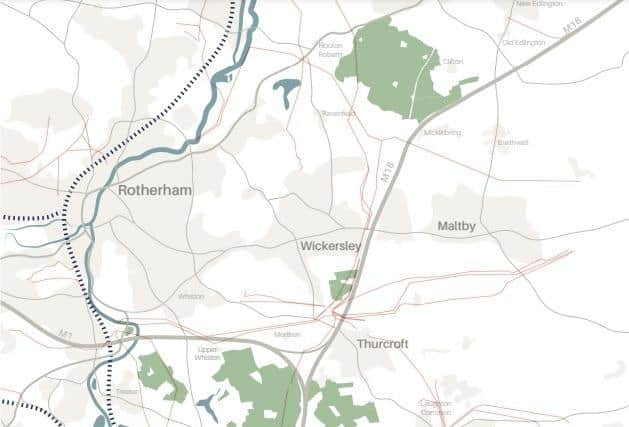
Speaking at a cabinet meeting on Monday, 20 October, Councillor Chris Read said the scale of the 750-megawatt development meant it would have “an impact on communities all the way from Doncaster out to the south of the borough”.
“Many of us will feel a lot of sympathy for communities that are potentially impacted by this kind of development,” he said.
“This one is a particularly big application, but there are a number of other smaller ones coming through at the same time. “Those planning rules must absolutely be followed appropriately, but if you are a resident who lives near one of those sites, you will inevitably consider the cumulative impact. And this particular application, the Whitestone one, is vast.”

Coun Read added that while greener energy was essential, residents’ worries must not be dismissed.
“It’s really important that we acknowledge and are cognisant of the worries and fears people will have about the impact this kind of application will have on their community,” he said.
“Many of us are sympathetic to the need to decarbonise our energy supply, but we have to do that in a way that is proportionate in those communities. We need to make sure those two needs are balanced, just as we would for any other major development that affects residents’ lives.”
The Whitestone scheme, spanning land across parts of Rotherham, Doncaster and Bassetlaw, is classed as a Nationally Significant Infrastructure Project (NSIP), meaning the final decision will be made by the Secretary of State rather than local councillors.
Because of its size, councillors agreed to delegate authority for preparing and submitting technical documents to the Strategic Director of Regeneration and Environment, in consultation with the Cabinet Member for Transport, Jobs and the Local Economy.
The move allows officers to respond within strict 28-day deadlines set by the Planning Inspectorate, which oversees nationally significant projects.
Councillor John Williams, cabinet member for Transport, Jobs and the Local Economy, said the decision was needed to ensure timely, high-quality submissions.
Councillor Brian Steele, chair of overview and scrutiny, said members had reviewed the approach with planning officers.
“We can’t alleviate all public concerns, but we need to make sure we can help residents as much as possible in areas where they’re going to be affected, and ensure they can make proper representations,” he said.
The cabinet report warned that without delegation, the council could miss statutory deadlines and be unable to submit evidence in time.
The Whitestone Solar Farm aims to generate enough energy to power hundreds of thousands of homes and could take up to two years to progress through the national planning process.