
Rotherham climate targets at risk without further action, report says

Rotherham Council has warned it cannot meet its climate targets without further action, as it sets out a new plan aimed at accelerating progress over the next year.
A report to cabinet says the council’s current action plan does not contain the full scope of actions required to achieve the council’s net zero targets, with emissions reductions slowing in recent years and some projects delayed.

The council has a target to reach net zero across its own operations by 2030, but the latest action plan for 2026/27 acknowledges more needs to be done to stay on track.
The new plan includes a number of changes and new areas of focus, particularly around how emissions are measured and where reductions can be made.
One of the most significant developments is a move to begin tracking indirect emissions, including those from contractors and supply chains which have not previously been fully accounted for. The council will trial carbon reporting with external partners to understand how this can be built into future contracts.
The council will also continue its heat decarbonisation programme, with 16 of its own sites due to be upgraded in the next year using a proposed £2.5m budget. This forms part of a wider plan to improve more than 50 buildings by the end of the decade.
The authority is also revisiting the idea of a town centre heat network after previous plans were abandoned, with work planned to explore whether a new scheme could be viable.
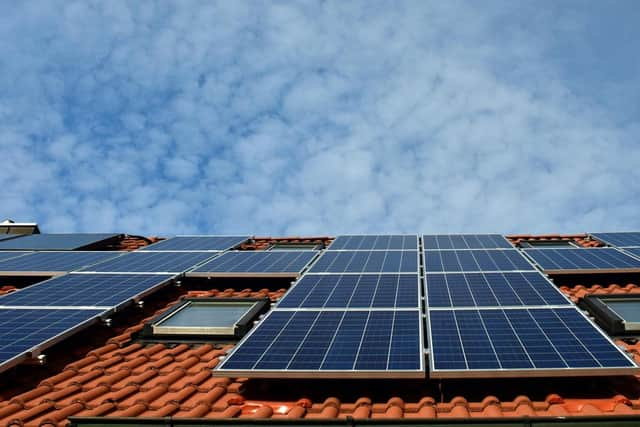
Solar energy projects are due to continue, including panels at the markets and library, as well as a new trial to install solar at a council-run school.
Transport remains one of the biggest challenges, with several actions carried over from previous years. A new study will be commissioned to assess how net zero transport emissions could be achieved by 2040, with the report noting that a large proportion of emissions come from journeys outside South Yorkshire.
The council is also planning to expand electric vehicle charging infrastructure through a new regional partnership, alongside additional local charging points in areas including Herringthorpe, Rawmarsh and Wickersley.
Further work will look at extending the use of low-carbon fuels in the council’s fleet and preparing for a longer-term transition to electric vehicles.
In housing, the council will continue efforts to improve energy efficiency, with more than 9,000 homes targeted to reach EPC Band C by 2030 and nearly 1,000 set to benefit from retrofit funding.
Elsewhere, the plan includes planting 10,000 trees, developing new biodiversity schemes and strengthening climate policies through a new Local Plan.
Several actions in the plan have been delayed, including transport studies and biodiversity work, reflecting ongoing resource pressures and uncertainty around funding.
The council says the updated approach is intended to move beyond individual projects towards a more coordinated programme of work, but warns that without faster progress and additional measures, its climate targets are unlikely to be met.