
£6m Catcliffe flood bridge project moves closer to construction

Rotherham Council says work to replace a bridge to alleviate flooding in Catcliffe is moving closer to the construction phase, as engineers prepare to appoint contractors and begin detailed design work, though residents have been warned the project could still take several years to complete.
The £6m scheme, which involves replacing the bridge on Treeton Lane over the River Rother, was approved by Rotherham Metropolitan Borough Council last year following severe flooding during Storm Babet, when around 140 homes in Catcliffe and Treeton were affected.
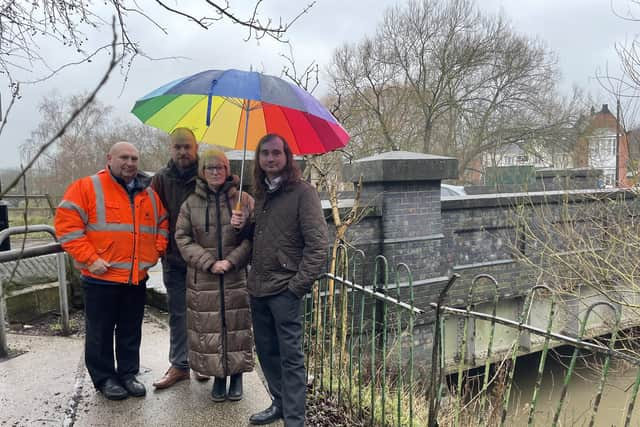

During a site visit in January, council officers said they were hoping to appoint a design and build contractor within the next three to four weeks, allowing detailed work on the final bridge design to begin.
The council said it was working closely with the Environment Agency, which is supportive of the scheme, although a number of approvals will be required as the design and construction progress.

Richard Jackson, the council’s head of highways and flood risk, said the new bridge would be designed to be thinner than the existing structure, creating more clearance beneath it so that larger volumes of water could pass through more easily.
He explained that the River Rother rises upstream in Derbyshire and the Peak District, meaning heavy rainfall some distance away can cause sudden surges in water levels in Rotherham, even when local rainfall is limited.
Councillor Lynda Marshall, cabinet member for street scene and green spaces, said the existing bridge was more than 100 years old and was no longer suitable for modern flood conditions.
“It was doing what it was designed to be doing when it was built, but now when we get too much water coming down, because of the bridge being that deep, it stops the flow,” she said.
She said the council was committed to funding the scheme and was hoping it would be completed within five years, adding: “We are committed to putting the money in… so they can rest easy in their beds.”
Officers said the length of the project was partly due to the complexity of working on land owned by the Environment Agency and the need to protect wildlife and river habitats during construction.
Mr Jackson said a key part of the next design stage would be assessing whether the existing bridge abutments and foundations could be reused, which could significantly reduce disruption and speed up the work.
Kyle Heyden, the council’s principal drainage engineer, said if the old abutments could not be retained, the scheme would become much more complex, removing water from the work area so the foundations can be rebuilt.
The council said construction would ideally take place during the summer months, when river flows are lower, rather than in winter conditions which can increase risk and delay work.
Officers also acknowledged ongoing anxiety among residents living near the river, particularly during periods of heavy rain.
Mr Jackson said the council was aware that even near-miss flooding events could be distressing and that seeing council staff on site often heightened concern.
To provide reassurance while the project progresses, the council has issued around 5,000 hydrosacks to households in the area. The biodegradable sacks expand when wet and can be used in place of traditional sandbags.
Councillor Marshall said residents had been kept informed through local councillors, public meetings and drop-in sessions, and praised the work of local flood wardens.
Officers stressed that while the new bridge was designed to reduce flood risk, it could not guarantee that flooding would never happen again.
Mr Jackson said the extreme flooding seen in 2023 exceeded anything previously recorded, adding that if rainfall levels were higher than the design standard, flood defences could still be overtopped.
The council said it would hold further public meetings once a contractor had been appointed and detailed design work was under way, so residents could be updated on progress.