
Camp fire caused loss of 50 years’ worth of valuable peat in the Peak District National Park
A camp fire which rapidly spread across the Peak District National Park caused huge environmental damage including the loss of 50 years’ worth of valuable peat.
A study has revealed the blaze, started by a camp fire which got out of control, burned 61 hectares of precious blanket bog habitat, underpinned by a deep layer of peat. The blaze also released greenhouse gas emissions equivalent to running all the homes in a town the size of Mapplewell or Thrybergh for a year.
The August 2018 fire, at The Roaches, required 12 fire appliances and a helicopter to put out.
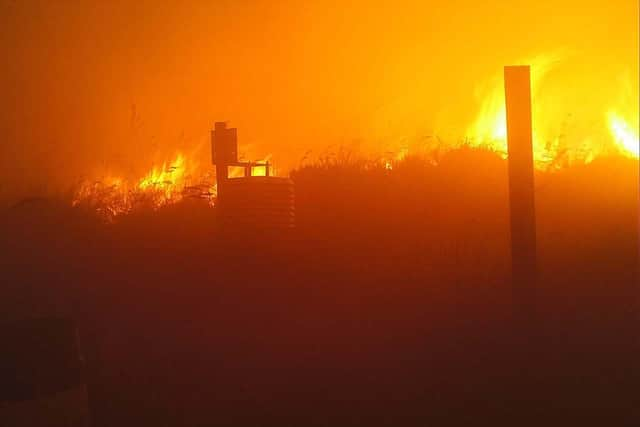

A case study by Moors for the Future Partnership has calculated the fire released more than 11,000 tonnes of carbon dioxide, equivalent to running 1,426 homes for one year.
The case study was only possible because scientists and volunteers were already monitoring the moor before the wildfire occurred.
They had installed ‘peat anchors’ to measure the depth of the peat, so after the fire it was possible to measure the new depth of peat and work out how much had been lost.
At a time when people are again enjoying the beauty and freedom of the Peak District National Park, the partnership is raising awareness of the huge impact of moorland wildfires.
The simple message is to never have any kind of fire in the countryside.
David Chapman, partnership chairman and a member of the Peak District National Park Authority, said: “We welcome people to the moors and ask every visitor to take responsibility for making their visit safe.
“This piece of research gives us a stark reminder of how damaging a moorland wildfires can be.
“There are a few simple asks we have of visitors: don’t have a barbecue or open fires; only camp in designated campsites; take your rubbish home with you; respect each other by following government guidance; and park responsibly.
“We’re truly grateful to the vast majority of visitors for respecting these guidelines.
“We ask that you spread the word to help us protect the UK’s original national park.”