
How sick online "com groups" work and why abusers target kids on platforms like Roblox
“Young people are being drawn into these sadistic and violent online gangs”
As the case of a Sheffield teenager convicted of encouraging another to self-harm highlights the danger posed by “com” groups, here is everything you need to know about them, and the online platforms they use to target kids.
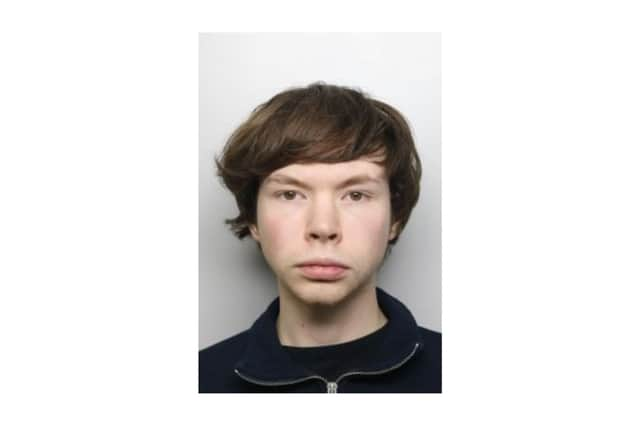
On Thursday (June 18, 2026), 18-year-old Elijah Palmer became the first person investigated by South Yorkshire Police to be sentenced for the offence of encouraging serious self-harm, an offence recently brought into law under the UK’s Online Safety Act 2023.


Sheffield Crown Court heard how Palmer, formerly of Badger Close, Woodhouse, Sheffield, was linked to the notorious “784” com group, a sextortion and sadomasochistic online network whose members deliberately target vulnerable victims to extort them for ‘content’ to share with other members of the network.
He targeted his victim on the online gaming platform Discord – subjecting her to an escalating campaign of intimidation, exploitation and coercion, culminating with her carving one of his “764”usernames into her chest on her 15th birthday.

As Judge Peter Hampton handed Palmer a sentence of eight years, eight months, consisting of four years, eight months’ custody and a four-year extended licence, he said he believed Palmer’s “terrible” offences would not have occurred without the platform “Discord” enabling them.
Speaking ahead of Palmer being sentenced, Detective Chief Inspector Scott Harrison, of South Yorkshire Police’s Protecting Vulnerable People Governance team, detailed the concerning practices sometimes encouraged by so-called “com” groups - and the notoriety often sought by members.
Here, in addition to taking you through what “com groups” are, we explain the tactics - and terminology - members use, the platforms they infiltrate and the extreme acts victims are forced into.
What are “com groups”?
According to DCI Harrison, a “com group is a network...a network of networks whereby com is really short for communities and malicious engagement.”
“Some com groups would be more inclined to find victims for sexual abuse material. Some could be for encouraging self-harm, almost sadistic. Others could be for blackmail, for money. Some com groups would be all three,” he said.
Commenting on what they uncovered through South Yorkshire Police’s (SYP) investigation into Palmer, DCI Harrison continued: “What we were very quickly able to establish through the language that was used and some of the communications that we found as part of the evidence in the case is that the suspect was liaising using com groups as almost like an identity to then encourage the victim to self-harm and also send sexual abuse material to them.”
When asked about the possible motivations of members, DCI Harrison said the “bigger picture” emerging from some of the com networks is centred around “notoriety.”
“So this is almost like gamification of violence whereby suspect groups will score points for whatever they are able to control the victim to do and these groups will then be in competition with other groups in relation to who can actually cause the most harm,” he said.
The National Crime Agency, which leads the UK’s fight against serious and organised crime, previously said tracking “com groups” is a major priority, following their rapid growth across international borders.
They warned “offenders collaborate and compete to cause harm both online and offline, often driven by a desire for peer kudos and notoriety rather than financial gain.”
Director General of the NCA, Graeme Biggar said previously: “This is a hugely complex and deeply concerning phenomenon. Young people are being drawn into these sadistic and violent online gangs where they are collaborating at scale to inflict, or incite others to commit, serious harm.”
He added: “It is especially concerning to see the impact this is having on young girls who are often groomed into hurting themselves and in some cases, even encouraged to attempt suicide.”
What is the age range of victims and perpetrators?
DCI Harrison revealed the age range of both perpetrators and victims is typically between 11 and 17-years-old.
”Unfortunately this is children. So we're talking between the ages of 11 to 17 is what we're seeing within our intelligence profile. This is both victim and suspect,” the DCI said.
“What we're seeing generally though is that it's mainly boys that are suspects. It can be females, but we're seeing that the large majority of victims are actually females.”
This was also echoed by the NCA, who said the dynamic online communities and forums, “predominantly consists of teenage boys.”
Young adults have also been known to be com group members.
What do com groups pressure victims to do?
Members commonly use "sextortion"—the blackmail and manipulation of young people into sharing intimate images.
Judge Hamptson said victims selected by the 764 group victims are typically “extorted into recording or live-streaming acts of self-harm, suicide, animal torture, sexually explicit acts and producing child sexual abuse material.”
Once victims have been abused to create “content” for 764, Judge Hampton said that material is shared with members to gain notoriety and standing within the group.
“The more sickening or extreme the material, the more acclaim there is to be gained,” he said.
“Group members keep and share information and material about victims such as names, images, personal details and descriptions about what the victim has already been forced to do. This allows multiple members to target the same child. Such pack behaviour is common.
“Members also share methods in how to effectively extort victims and carry out abuse.”
What methods do com groups use to lure in victims, and what type of children and young people do they target?
DCI Harrison said officers often see com groups “enter and access positions online where children are sharing views about their vulnerabilities.”
He added: “Com groups will then go and infiltrate those groups to gain victims and then take those conversations away from the place in which they first met them online to areas and other apps where they'll then discuss things on a one-on-one basis.”
“Victims are often vulnerable in these cases. They're often selected by the com groups for their vulnerabilities,” the detective said.
In his sentencing remarks, Judge Hampton went so far as to say the children and adults preyed upon by the 764 group are “targeted precisely because they are so obviously vulnerable.”
Instead of using the dark web, com groups tend to operate on mainstream gaming and social media apps and platforms.
Commenting on the activities of the 764 group, Judge Hampton said: “Members will look for online spaces where children are discussing issues such as depression, eating disorders or self-harm, where the chances of finding a vulnerable victim are increased.
“These online spaces and gaming platforms serve as entry points, where perpetrators establish contact with victims, luring them onto more private messaging platforms and groups where trust is established and abuse begins.”
Which social media and gaming platforms are used by com group members?
Mr Biggar said such groups are not lurking on the dark web, “they exist in the same online world and platforms young people use on a daily basis.”
In the case of the “764” group, Sheffield Crown Court heard how the group’s primary method of victims occurs on popular online gaming platforms.
Judge Hampton explained: “Members will look for online spaces where children are discussing issues such as depression, eating disorders or self-harm, where the chances of finding a vulnerable victim are increased.
“These online spaces and gaming platforms serve as entry points, where perpetrators establish contact with victims, luring them onto more private messaging platforms and groups where trust is established and abuse begins.”
In the case of Palmer, who was 17-years-old when he committed the offences, he used what Judge Hampton described as a classic 764 group method to encourage a third party to set up a group chat on the Discord messaging platform.
“Discord is an online messaging platform allowing communication by voice, video and text. The ordinary dictionary definition of the word Discord is a lack of harmony. If the owners and operators of that platform intended the dictionary definition to reflect its purpose and use, certainly in this case it was an apt choice,” explained Judge Hampton.
He continued: “I am satisfied that these terrible offences would not have occurred without Discord enabling contact between the two of them.
“I am further satisfied given this case, cases in other jurisdictions such as the United States of America, Canada and Australia, and the very recent case before Leeds Crown Court involving the same platform, that Discord is either unable or unwilling to protect its users from such abuse or illicit imagery.
“Members of the public should be aware that Discord is a dangerous space.”
Judge Hampton’s comments came just days after the Government announced a social media ban for under-16s. Details on which platforms specifically will be affected have not yet emerged,. While messaging apps like WhatsApp are not expected to be included, it is not clear what the approach will be to platforms such as Discord or Pinterest.
A spokesperson for Discord told The Star: “Real-world violence of any kind is devastating and content that encourages or glorifies this behavior has no place on Discord.
“Our safety systems combine advanced technology and human-led investigations, alongside user reports to identify accounts or spaces engaged in harmful activity.
“When we find that policies are violated, we take decisive action, including removing content, banning accounts, shutting down violative servers, and proactively reporting violations to law enforcement where appropriate and in compliance with the law.”
What terminology is used by com groups like 764?
Detailing the case against Palmer, prosecutor Gordon Stables explained how 764 members often communicate using terminology which is specific to the group.
Such terminology includes:
- To “swot” someone: This is when members call in a false serious crime report to the police involving their victim and family. This is often used to threaten victims, and to make them fearful of the consequences of police becoming involved
- “Lore books”: Used to describe the information shared about a victim, which often includes their name, images and videos they have shared for “content,” their personal details and descriptions of what they have been forced to do
- “Doxxing”: Sharing a person’s personal information, such as their address, school or workplace, online
- “Cut or blood signs”: The term for forcing a victim to carve names or phrases associated with the 764 group into their bodies, on some occasions leading to victims bleeding
Why is the “764” com group notorious, and what activities does it engage in?
The “764” is one of the most notorious and extreme examples of a group.
Judge Hampton described them as a “decentralised criminal network primarily involved in child exploitation, cyber extortion, sadomasochism, neo-Nazism and satanism.”
“764 operates cross-border, their activities are made possible by the use of multiple online digital platforms,” he said.
Just as with other com groups, Judge Hampton said many members of the 764 group are children and young adults themselves.
He explained: “Often, they have been subject of abuse or grooming themselves before going on to becoming perpetrators. This trauma cycle is essential to the group's existence.”
“The group is notorious for forcing victims to carve symbols, names or numbers into their skin as a show of ownership by the group.
“In some instances, the group engages in making false reports to authorities about criminal activities involving the victim to try and provoke significant law enforcement response and all the risks that brings, further terrorising the victim.
“This blend of psychological abuse, cybercrime and physical harm is a hallmark of the group's methods.”
Which members of the 764 group have been prosecuted?
Sheffield teenager Elijah Palmer is just the latest group member to be convicted.
Dylan Phelan
Earlier this month, Dylan Phelan was jailed for six years, four months for encouraging 21-year-old Travis Dyer from Louisiana, America to take his own life, during a Leeds Crown Court hearing.
Phelan had been taken to the police station by his parents who were informed about their son’s involvement in Travis’s death by a woman who Phelan had initially met online and later in person. She had been told by Phelan, of Churwell, Morley, about the death of Travis - who Phelan referred to as “Tyler” - some months after it happened.
In interview, Phelan told officers from West Yorkshire Police that he had spoken to “Tyler” online for a few months prior to his death both in text exchanges and video calls. He said in late October 2024, “Tyler” invited Phelan and others on to a video call where he ended his life.
A recording was made of this call, and Phelan can be heard during the call encouraging him to pull the trigger and laughing afterwards.
Commenting on Phelan’s conduct, Travis’ family said: “We recognize that the defendant was part of a group. This ‘group-think’ turned a digital space into a hunting ground.”
Judge Hampton suggested Phelan is believed to have been a member of the 764 group, as he sentenced Palmer.
Cameron Finnegan
In January 2025, Cameron Finnegan, then aged 19, was jailed for six years after officers found online chats, in which Finnegan encouraged a young female believed to be in Italy to live-stream her own suicide. Officers were unable to identify the victim.
Finnegan, of Horsham, West Sussex, was identified as a member of the 764 group, and was found to have boasted to members about his attempts to get other children to hurt themselves.
Sentencing Finnegan at the Old Bailey, Mr Justice Jay described 764 as a “satanic, far-right extremist group,” associated with Order of the Nine 3 Angles or “O9A”.
Mr Justice Jay said: “There is evidence that O9A is a decentralised esoteric militant accelerationist network of threat actors who believe that Western civilisation’s Judeo-Christian heritage corrupts modern society.
“The word “accelerationist” is used because O9A, together with 764 and other groups, legitimise and encourage the use of violence building up to potential mass casualty events.”