
The Legacy of the Manvers Riots - what have we learned two years on?
‘An inarguable point is that the concerns that drew many people to Manvers have far from disappeared’
Two years ago today, Rotherham became international news in the worst possible way.
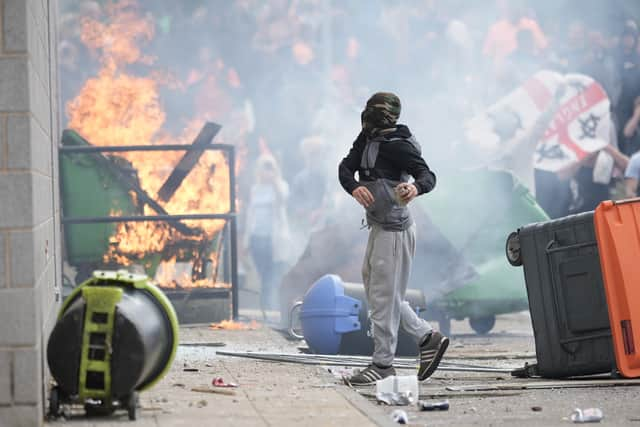

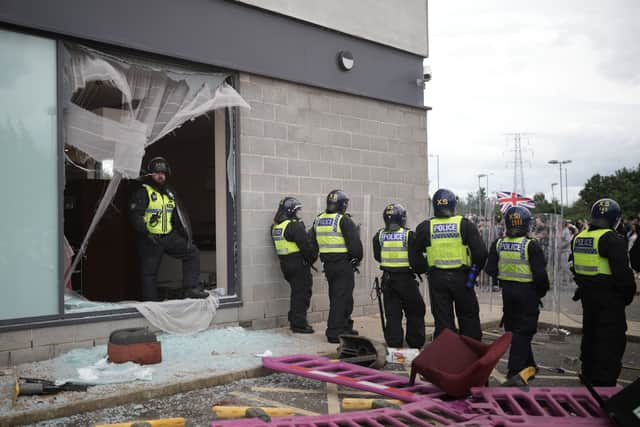
The disorder outside Manvers' Holiday Inn Express lasted only a few hours on August 4, yet the resulting criminal investigation and court proceedings continued for almost two years.
Every hearing added another piece to the picture until, with the final cases concluded, it became possible to look beyond the riot itself and ask a different question.
What exactly have we learned from the riot's aftermath?
The first lesson is clear.
However passionately people feel about immigration, the courts drew an unmistakable line between political opinion and criminal behaviour.
Throughout the succession of sentencing hearings, judges accepted that people are entitled to hold strong views, protest peacefully and campaign for changes in Government policy.

What they rejected was the suggestion that those beliefs could ever justify violence, intimidation or attacks on emergency workers and others.
That distinction was sometimes lost amid the political arguments surrounding Manvers, yet it became the thread running through almost every case.
The judges were not passing sentence on people's opinions about immigration.
They were judging what individuals had actually done outside that Rotherham hotel that day.
After an analysis of two years' worth of court reports, another pattern began to emerge.
Those who stood in the dock had not arrived at Manvers expecting to become the face of a national news story.
Many had jobs, families and otherwise ordinary lives.
Some had previous convictions; many did not.
Some admitted what they had done at the earliest opportunity, while others denied their involvement until confronted with compelling evidence.
Whatever motive had brought them there that afternoon, almost all left with criminal records that will outlast the political argument which first drew them to the protest.
Another thing also became clear as the cases progressed. The courts judged individuals, not as part of the crowd as a whole.
Some defendants received lengthy prison sentences for leading the violence or committing the most serious offences.
One Swinton man received nine years, as did another from Barnsley.
Others were sentenced for throwing missiles, assaulting police officers, damaging property or encouraging disorder.
The sentences reflected individual responsibility because, ultimately, crowds do not commit offences; people do.
If the court cases revealed something about those involved, the police investigation revealed something about the age in which we live.
Previous generations of rioters often disappeared into the anonymity of the crowd.
At Manvers, the opposite happened.
Detectives built their cases from CCTV, police body-worn cameras, mobile phone recordings, television footage and social media videos, many filmed by people who had unknowingly recorded evidence that would later be used in court.
Members of the public responded to repeated appeals by identifying people they recognised.
Some might see that as "grassing." Others would say those providing information were doing it for the right reasons.
It was painstaking policing rather than dramatic detection.
Technology played a key part, but so did local knowledge.
Together they allowed investigators to reconstruct events with a level of detail that would have been almost unimaginable a generation ago.
Another inarguable point is that the concerns that drew many people to Manvers have far from disappeared.
Immigration remains one of Britain's most divisive political issues and Rotherham, like many communities, continues to wrestle with questions about asylum, border security and pressure on housing and public services.
People should and do have the right to discuss immigration in a passionate but sensible way.
That right disappears when people attack police officers, endanger lives or attempt to set fire to a building with frightened families inside.
The immigration debate is far more complex than those angry scenes outside the Manvers hotel suggested.
It remains entirely possible to believe Britain's immigration system needs reform while believing just as firmly that the violence outside the building was indefensible. One proposition does not cancel out the other.
The riot became a global news story within hours, but, like the grooming gangs scandal before it, it should not be allowed to define Rotherham.
For most, life quickly returned to normal.
Businesses reopened, traffic flowed through Manvers once more and the town continued with its daily routine.
In the background, however, detectives and lawyers continued their work, quietly assembling one of the largest public order investigations South Yorkshire Police has undertaken.
Did the events of August 2024 change anyone's mind about immigration?
It seems unlikely.
The concerns that brought people to Manvers remain part of the national political debate and show little sign of disappearing.
What the court cases did achieve was to answer a different question altogether. They established, case by case, that however heated the argument over immigration becomes, violence had no place within it.
That remains the clearest legacy of Manvers today.
MANVERS BY NUMBERS
4 August 2024: Disorder outside the Holiday Inn Express, Manvers.
200-250: Asylum seekers housed in the hotel.
22: Hotel staff inside during the disorder.
Up to 400: protesters gathered outside the hotel.
64: Police officers injured.
3: Police horses injured.
1: Police dog injured.
100,000+ hours: CCTV, body-worn video and other footage examined during the investigation.
120: People jailed following the investigation and prosecutions
300+ years: Combined prison sentences imposed
9 years: Longest custodial terms imposed on the principal offenders.
2 years: Time taken to conclude the investigation and principal court proceedings.
Zero: Evidence that the events of August 2024 settled Britain's immigration debate.