
How detectives solved shocking 'body in the bag' murder - with help from Sheffield University

Detectives had very little to go on at first
In January 2000, two men found a sports bag dumped at the side of a road in Sheffield, opened it and made the shocking discovery of human remains - triggering one of the most difficult investigations ever conducted locally.
It became known as the ‘body in the bag’ case and initially detectives had no idea who the dead man was because his remains were so badly decomposed.

His body had been squeezed into a sports bag and discarded like rubbish on the side of a road on Kettlebridge Road, Attercliffe.
The bag had laid there undiscovered for around three months before two dog walkers stumbled upon it and overcome with curiosity, unzipped it.
Detectives had very little to go on.

There was nothing to suggest the identity of the man and no clues about where he had been living before his death.
All cops had was the bag he was found in and a pair of curtains and supermarket carrier bag used to wrap his body.
So detectives turned to outside experts for help.
Sheffield University had specialists in facial reconstruction techniques and they were called in to create an image of how the mystery man would have looked when he was alive.
Still with no idea of the dead man's background, police turned to both The Star, for South Yorkshire coverage, and the BBC Crimewatch programme for national publicity.
Amazingly, the answer to their question came from within the police service itself.
A mechanic working at a South Yorkshire Police garage thought he recognised the man and checks revealed his suspicions were correct.
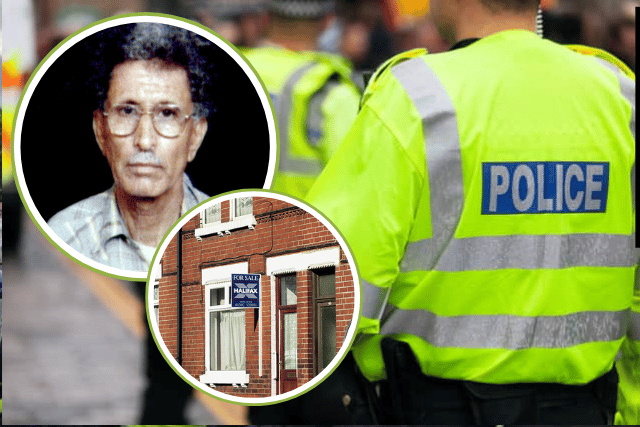
The man was identified as retired cutler and steel worker Mohammed Nasser Ali, who was 75 when he died. He had moved to Sheffield from his native Yemen in the early 1960s.
Speaking to The Star back in 2001, retired Detective Chief Superintendent Mick Burdis said: "The major problem had been that we could not at first identify him. We discovered he wasn't an English native and had difficulty in trying to trace his origins. We didn't even know if he was a victim of homicide or had died and been left that way because he was an illegal immigrant. There were enormous difficulties.
"Without identifying the body, lines of inquiry are virtually nil. The facial reconstruction was the breakthrough.
"We would probably have got to the identity without it. We found some bones which had been fixed in his foot and we may have identified him that way, but it would have been the slow way.”
Once Mr Ali’s identity was established, detectives then set about trying to trace his family and eventually pieced the case together.
Mr Ali's son, Hassan Mohammed Nasser, in his early 40s at the time, told them his father was alive and living in Saudi Arabia.
But detectives were suspicious.
They arrested him and Mr Nasser’s son, Kassan Hassan Mohammed, who was in his late teens and confessed and explained what had happened.
Mr Ali’s throat had been slashed because he had been considering a move back to his homeland in the Yemen and his family feared it would leave them out of pocket.
Mr Ali’s son Hassan Mohammed Nasser, of Catherine Street, Burngreave, and Mr Ali’s grandson Kassan Hassan Mohammed, of St Philips Lane, Netherthorpe, were both found guilty of his murder after a trial at Sheffield Crown Court.
They were jailed for life.
Jurors heard that after he was killed, the pair had continued to claim benefits to the tune of £9,500 which Mr Ali had been entitled to. They told people he had returned to the Yemen.
They had initially concealed his body by building a tomb in the cellar of his home in Palmer Street, Doncaster.
But eventually, when they wanted to sell Mr Ali’s house, they knew they had to move the body.
"Because it was so decomposed they thought we would never be able to identify it. But they were wrong," said South Yorkshire Police back then.