
Report claims more than 80 per cent of UK councils face EV charging capacity bottlenecks

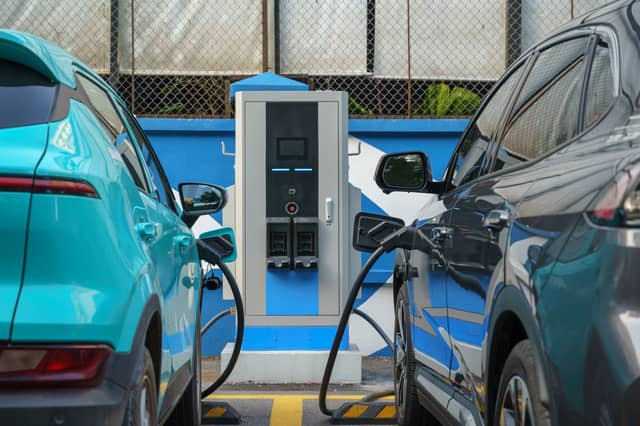

A new index published by electrification specialist Karas Plating suggests electrical grid constraints could become a major barrier to electric vehicle adoption, with most UK local authorities facing infrastructure pressures.
More than four in five local authorities across the UK could face significant electrical grid constraints as electric vehicle adoption continues to rise, according to a new report from electrification specialist Karas Plating. The company's inaugural UK EV Charging Capacity Gap Index assessed 382 local authorities and found that 82 per cent face either a critical capacity deficit or a high risk of grid bottlenecks.
According to the index, 26.2 per cent of councils fall into the category of Critical Capacity Deficit, while a further 56.8 per cent are considered to be at High Bottleneck Risk. Just two local authorities were identified as having High Infrastructure Readiness.
Karas Plating said the findings suggest the UK's transition to electric vehicles could be increasingly constrained by the capacity of local electricity networks rather than the availability of charging points alone. The report estimates that Britain's 2.2 million battery-electric vehicles are currently served by 121,171 public charge points, equating to around 18 EVs per charger. It also estimates that the UK remains more than 350,000 public charge points short of the Competition and Markets Authority's target of 480,000 by 2030.
The index found Scotland recorded the highest average capacity gap score, closely followed by Wales, which it identified as having the highest regional grid constraint score. Among the local authorities highlighted by the report as facing the greatest infrastructure pressures were Knowsley, Wolverhampton, Mid and East Antrim, Salford, Brent, Perth and Kinross, St Helens, Blackpool, Glasgow City and Wakefield.
Meanwhile, Lisburn and Castlereagh, Shropshire, Lewisham, Manchester and Rotherham were highlighted as areas showing stronger levels of infrastructure readiness.
Alan Pennington, Managing Director at Karas Plating, said: "Installing a physical charge point is only the final link in a much longer chain. The true bottleneck lies beneath our streets, in substations, switchgear, transformer capacity, and cabling systems that were never designed to handle megawatt-scale residential overnight charging and commercial fast-charging hubs simultaneously."
Karas Plating said the report highlights the need for investment in electricity infrastructure alongside the continued expansion of public charging networks if EV adoption is to continue growing at current rates.
- RELATED: London AI startups backed by 2100 Ventures recognised among Europe's top tech firms
- RELATED: Bilfinger's orders surge for second quarter
- RELATED: VIPCOO launches Black Friday sale on electric dirt bikes and scooters
- RELATED: Sabrina Carpenter stars in new Johnnie Walker campaign directed by Damien Chazelle