
The 'excellent' pubs in Sheffield's 'Little Chicago', at the heart of bloody 1920s gang warfare

It’s a Sheffield neighbourhood with a bloody history which, having shaken off its violent reputation, is today home to some of the city’s best pubs.
Now beer lovers can take a guided tour around Sheffield’s once infamous ‘Little Chicago’ district and its much-loved watering holes, thanks to a new booklet.
Sheffield and District CAMRA’s Little Chicago: Sheffield Pub Heritage Walk booklet takes readers on a tour from West Bar to Kelham Island, via Scotland Street.
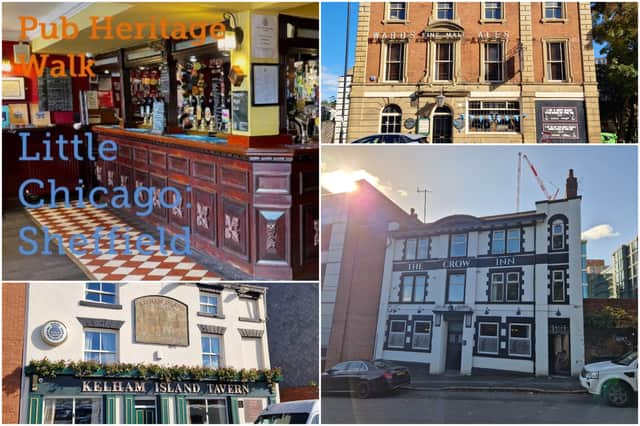

They can learn about the area’s fascinating past, from the 19th century right up to modern times, and enjoy stops at three highly recommended pubs en route, The Crow Inn, Kelham Island Tavern, and Shakespeares.
The 32-page booklet, edited by Dave Pickersgill, and priced £2.99, has been released to coincide with the 48th Sheffield Steel City Beer and Cider Festival, taking place at Kelham Island Museum from Wednesday, October 16 to Saturday, October 19.
Fatal shooting
The Crow Inn, formerly the Crown, has a particularly fascinating past.
The booklet describes how it was a ‘key player’ in the Chartist protests and was where protesters met in January 1840, prior to a riot on Haymarket where several people were deliberately shot by soldiers from Rotherham.
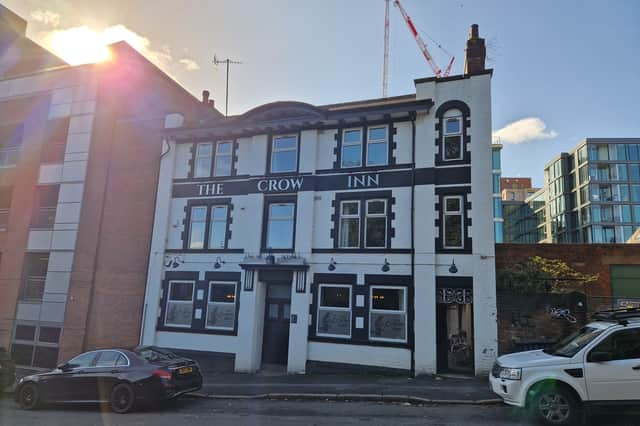
Two decades later, during the Sheffield Outrages, the saw grinder James Linley was shot while sitting in the pub, reportedly for refusing for refusing to join the trade union. He sadly died several months later, in February 1860.
The Crow is the last pub left standing on Scotland Street, which in the late 19th century was home to 14 licensed premises and one off-licence.
Gang warfare
Scotland Street was at the centre of Sheffield’s gang warfare during the 1920s, hence the area’s ‘Little Chicago’ nickname.
Growing unemployment and rapid social change created the perfect brewing conditions for violent unrest, and the booklet describes how Sheffield briefly became the ‘most turbulent city in Britain’ as the likes of the Gas Tank Gang, the Mooney Gang and the Park Brigade clashed on its streets.
On February 17, 1925, a fight broke out on Scotland Street between rival gangs, with bricks, cellar grates and other missiles allegedly thrown.
A few months later, on July 11, Patrick Mooney, the 60-year-old uncle of gang leader George Mooney was struck on the head with ‘something heavy’ outside the Italian Club on Scotland Street by Peter Winsey, who was associated with the rival Garvin gang.
Mooney was left unconscious with a ‘jagged wound around his left ear’, and Winsey received two months hard labour for the attack.
The name Scotland Street is believed to have come about through a simple misunderstanding, with the accents of the many Irish immigrants who arrived in the area during the 19th century being mistaken for Scottish ones.
The booklet doesn’t just refer to the area’s violent past.
Foul truth behind George Orwell’s ‘twinkling’ stars
Among the many interesting snippets is one about Joseph Edmund Webb's cast iron Sewer Gas Destructor Lamps, which drew foul-smelling sewer gases from below.
When George Orwell stayed at Parkwood Springs in 1936, while researching The Road to Wigan Pier, he recalled looking out over the city and seeing those lamps ‘twinkling like stars’.
A four-metre high cast iron artwork by David Appleyard, called ‘What a Stinker!’, pays homage to those innovative lamps.
Keep up to date on everything in Sheffield and South Yorkshire with The Star’s free newsletter delivered straight to your inbox
The booklet is sponsored by Abbeydale Brewery and the Crow, and is available from a number of local outlets, including: The Crow Inn, Draughtsman (Doncaster), the Famous Sheffield Shop, Kelham Island Books and Records, Kelham Island Tavern, Millennium Galleries and Saint Mars of the Desert tap room.
For postal copies, or retail enquiries, email: [email protected].
For more information about the Steel City 48 Beer & Cider Fest, visit: https://sheffield.camra.org.uk/festival/