
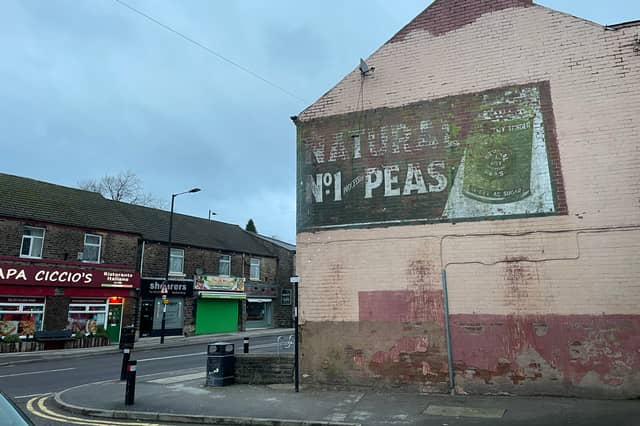


They are the portals to the past dotted around Sheffield which are gradually fading into history themselves.
Ghost signs, as they are known, are old adverts or shop, pub or other business signs which have been painted or embossed onto the wall of a building - offering a clue as to its former use.
Some are well preserved but many have faded or worn away badly over the years and are today barely legible, requiring some serious sleuthing to work out what goods or services they once promoted.
Historic England describes such ghost signs as an ‘important part of the historic fabric on our high streets’.
It adds: “These faded relics can tell us much about our collective architectural, cultural and social history.”
Historic England has created an interactive online map where people can share their photos of ghost signs and the stories behind them, where known, and dozens of people have uploaded images taken across Sheffield.
Below are some of the best images of ghost signs around Sheffield which have been shared with Historic England.
The locations include Nether Edge, Crosspool, Hillsborough, Neepsend, Wincobank, Darnall and Attercliffe.
To see more ghost signs and to share your photos, visit: https://historicengland.org.uk/whats-new/features/ghost-signs/.
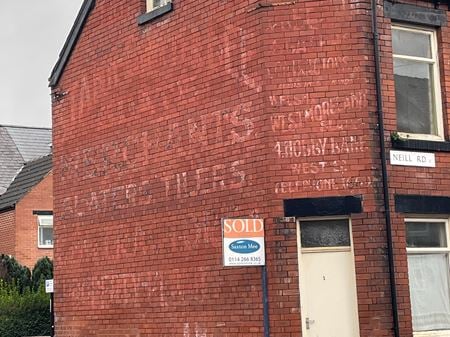
9. 'Staniforth & Lee Slate Merchants'
The barely legible sign on this house at the corner of Neill Road and Bruce Road, in Sharrow Vale, Sheffield, is for an old slating and tiling firm | Delyth Harrison/Historic England Photo: Delyth Harrison/Historic England

10. Unknown
The ghost sign on this wall, beside a parking bay and Next Chapter Books, on Rustlings Road, Sheffield, is so faded the words are almost impossible to make out. Can you work out what it once said? | Jane Bartholomew/Historic England Photo: Jane Bartholomew/Historic England

11. ‘Hovis which nourishes most’
Squint and you can just about make out the words of this ghost sign on the gable end of Glen Villas, on Fulwood Road, Nether Green. Jane Bartholomew, who took this photo, helpfully explains that the sign reads ‘Hovis which nourishes most’, ‘sandwiches’ and ‘Leclere’s cosy Tearoom’. She adds: "This was once the shop of the Leclere family of confectioners. Celine Leclere was the daughter of Henri, a confectioner and engraver who came from Paris to settle England in the 1860s and married his wife Mary soon afterwards. Celine's brother, Marcelline, was a master baker based in Devonshire Street along with his wife, Lily, who tragically lost her life there on the first night of Sheffield’s 1941 blitz, along with her two granddaughters, Doris and Eileen, who were pupils at Nether Green School across the road." | Jane Bartholomew/Historic England Photo: Jane Bartholomew/Historic England
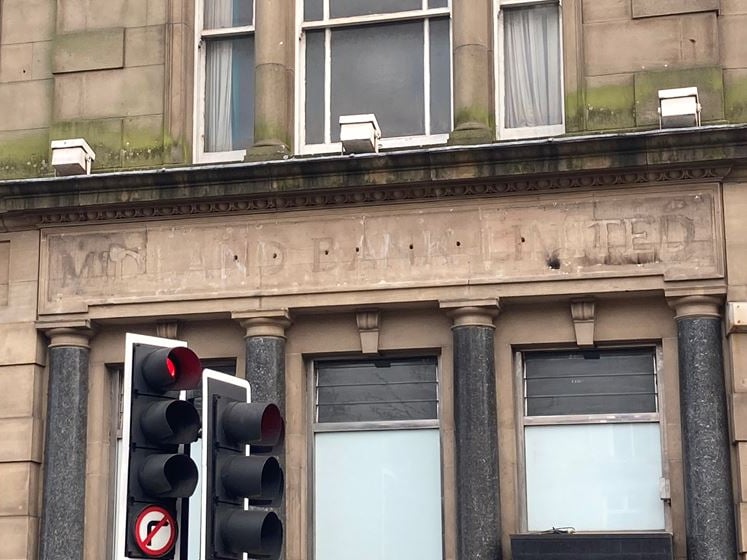
12. 'Midland Bank Limited'
The old lettering is still faintly visible on this former 'West End, Broomhill' Midland Bank branch on Fulwood Road, Sheffield. The elegant building, with urns and heads carved into the stonework, is today home to a cafe/restaurant called La Reserve by Cawa. | Jane Bartholomew/Historic England Photo: Jane Bartholomew/Historic England