Celebration of Sheffield steel’s key role in war effort

Spitfires and Hurricanes are icons of the Second World War and were crucial to winning the Battle of Britain.
Mass production of the aircraft hinged on the output of Vickers steelworks in Sheffield, which in turn relied heavily on a constant supply of gas to fuel its furnaces, points out Sara Wilcox, of gas supply company Cadent.
The Coventry firm has been looking into industry archives following the 75th anniversary of VE Day.
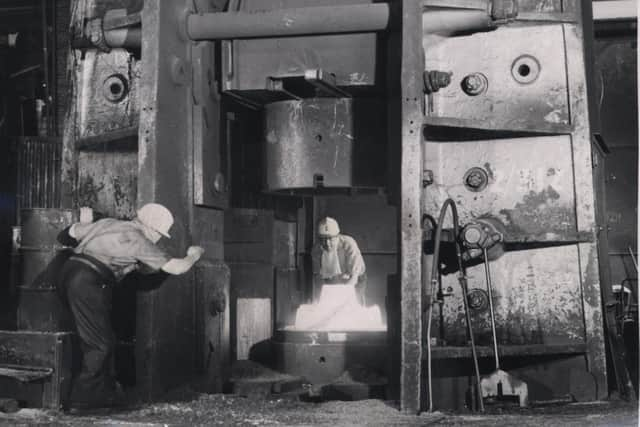
In the first two years of the War, there was only one 15-ton drop hammer available in the whole country for turning out crankshafts at the required rate to make Spitfires and Hurricanes – at Vickers.


Sara says: “And, in spite of massive damage caused by German bombs to gasworks and pipelines, the Sheffield and District Gas Company amazingly kept gas flowing at all times to this furnace.
“This meant the drop hammer could operate seven days a week, in 16-hour shifts, making 168 crankshafts every day.”
And it wasn’t just aircraft which relied on Sheffield’s steel.
Historian Compton Mackenzie writes: “Not a Battleship could have put to sea, not a plane could have been made airborne, not a tank could have taken to the field if Sheffield’s steel had not produced in immense quantities. The Sheffield and District Gas Company can fairly claim that Sheffield could not have done what Sheffield did without the help of gas’.”

Howard Forster, Cadent’s chief operating officer, said: “It’s a great source of pride to reflect on the important role the gas industry had in supporting the war effort.
“Gas has been part of British life for mroe than two centuries; pioneering, adapting and rising to every challenge. We’ve proven we stop at nothing to keep energy flowing, through the good times and the bad. Many of our offices and depots are home to memorials to gas industry workers who gave their lives during the Second World War.”