
“It made a massive difference”: Sheffield experts test no-surgery therapy to strengthen stroke survivors' arms

"Since having the nerve therapy, I’ve seen a huge improvement in my arm. I can do everything."
A new device being trialled in Sheffield could help improve stroke survivors’ use of their arms and hands without surgery.
Craig Corke, aged 52, who lives in Chapeltown, had a stroke in April 2017 and used an earlier, implanted version of the treatment.
He said: "I’d had a stroke in the night – my wife woke me up and I was mumbling, my brain had gone. I’d lost my speech and movement in my arm and right leg. My face was drooping just like on the FAST adverts.
"I ended up in hospital for three months, the movement in my leg came back on its own but my arm was like a dead weight."
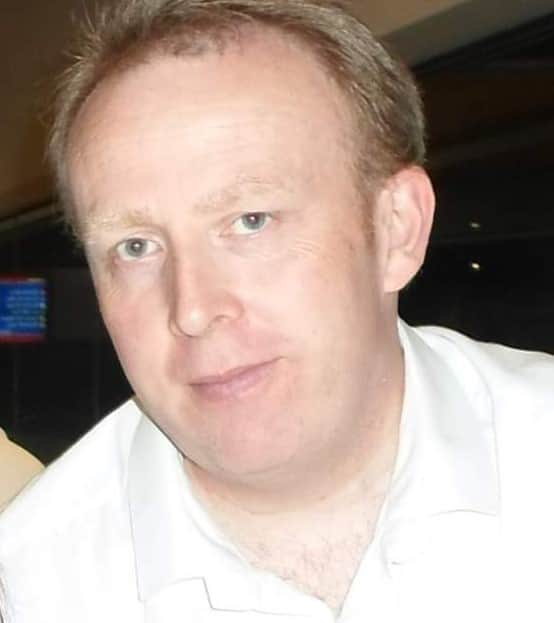

Craig, now back to working in IT, had an earlier, pacemaker-like device surgically implanted into his chest in 2018.
‘Tickling' a nerve at the ear using mild electrical pulses from this device helped to improve the use of his hand and arm.
He added: "Since having the nerve therapy, I’ve seen a huge improvement in my arm. I can do everything.
"I can drive, do DIY, gardening, fix the roof and do everything around the house. It’s made a massive difference to my life."
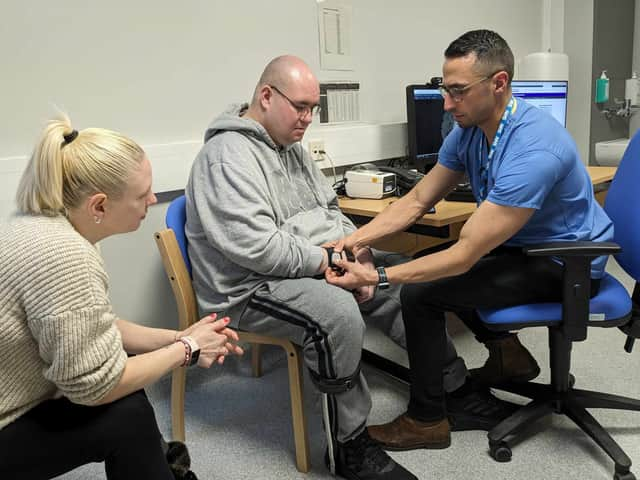
Now, a wearable device, connected to an earpiece, may be able to stimulate the vagus nerve to help strengthen the arm and hand.
This could mean people self-administering it at home, avoiding the need for surgery and saving the NHS money in the process.
Of over 100,000 people in the UK who have a stroke every year, about a third of survivors are left with permanent arm weakness, limiting their ability to carry out everyday activities.
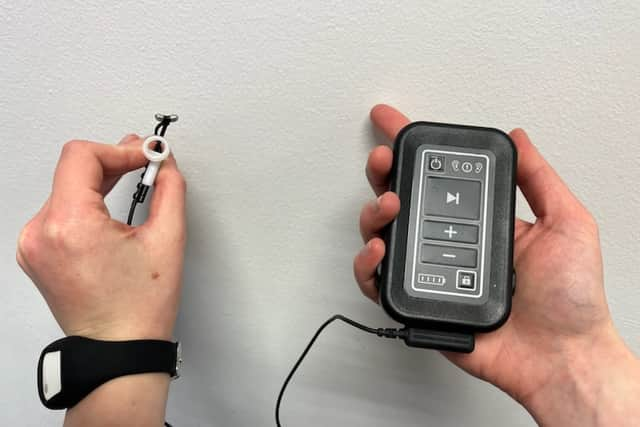
The trial is the first of its kind in seeing if stroke survivors' strength can be improved through the skin.
Rehabilitation therapy has been the main treatment for people recovering from a stroke, but with this alone, many survivors still have persisting arm weakness.
Up to 243 patients from 15 UK stroke centres are set to be enrolled into the trial over the next two years.
The TRICEPS trial is led by researchers from Sheffield Teaching Hospitals NHS Foundation Trust and the University of Sheffield.
To find out more about the trial, contact [email protected] or visit the website.