
Andrew Rodgers, 65, from Hillsborough,received weekly injections of an immunotherapy drug known as atezolizumab directly into his bladder, rather than as a system-wide treatment, prior to a planned cystectomy in a first-in-human trial known as INVEST.
The £2.5m trial, led by Sheffield Teaching Hospitals NHS Foundation Trust in partnership with the Universities of Sheffield and Leeds, is the first to investigate if a direct injection of the drug into the bladder's tumours can better support the body’s immune system to attack bladder cancer cells, thereby reducing the need for surgical removal of the bladder.
It builds on recent breakthroughs in care which have seen a new class of immunotherapy drugs known as immune inhibitor checkpoints extend lives by nearly twice as long as existing treatments for those living with the advanced form of the disease.
Up until recently survival rates for advanced bladder cancer have remained unchanged for decades.
Atezolizumab works by harnessing a patient’s own immune cells to locate camouflaged cancer cells and then destroy them. The drug is already given as a systemic treatment to patients with advanced metastatic bladder cancer once patients progress post chemotherapy.
However, in INVEST the drug is given as a direct injection in the bladder to those whose cancer has not spread beyond the organs and who are waiting for a cystectomy to remove the whole bladder and whose cancer can be cured.
The researchers believe that this novel approach - which is being tested in patients for the first time in the trial - may spare certain cancer patients from bladder removal surgery in the future, improving quality of life whilst also extending lives.
Another additional element of the trial involves blood and urine samples being sent off for DNA analysis. This information will help to build up a picture of whether genetic mutations found in a patient’s tumour make them more or less likely to respond to treatment. In future, this could lead to the development of new treatments.
Andrew signed up to the cutting-edge trial in early February shortly after he learned his bladder cancer, which he had been first diagnosed with in January, had spread into his bladder wall.
During the trial, the lifelong Sheffield United fan, who could not safely undergo chemotherapy due to his low kidney function, received weekly 20-minute atezolizumab bladder injections for five weeks before undergoing planned bladder removal surgery on 25 April.
His tumour responded, which put him in a good position prior to surgery - with the INVEST team doing "cartwheels" about the results.
“I couldn’t do anything about my own diagnosis, but there was a chance to help future generations,” he said.
"All throughout my treatment, the people I’ve met have been absolutely magnificent. It’s been a lot to deal with in such a short space of time, but my tumour shrunk ahead of my surgery, which was amazing, and I’ve been given the all-clear. There’s been no signs of the cancer in my bladder and lymph nodes following surgery.”
Approximately 21,185 people in England are diagnosed with bladder cancer every year.
Professor Syed Hussain, Chief Investigator and Honorary Consultant at Sheffield Teaching Hospitals NHS Foundation Trust and Professor of Medical Oncology at the University of Sheffield, said: “We are delighted to be running this trial which aims to see if using atezolizumab locally within the bladder can improve outcomes for patients diagnosed with early-stage bladder cancer. Patients with non-muscle invasive bladder cancer who are waiting for cystectomy and those with muscle invasive bladder cancer who are at high risk of the cancer returning but are not well enough to undergo chemotherapy are also eligible for this trial. Whilst all patients will still undergo bladder removal, we hope to demonstrate that this may not be necessary in future for a subset of patients.”
The trial, funded by Roche, is a collaboration between the urology and oncology medical specialities at Sheffield Teaching Hospitals NHS Foundation Trust.
1. Contributed
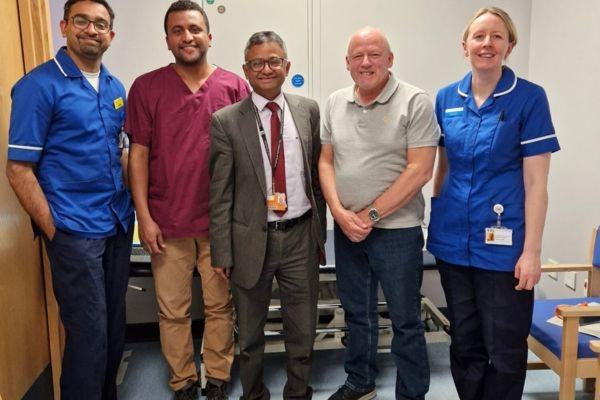
Andrew (second from right) saw his tumour shrink prior to surgery thanks to the groundbreaking trial Photo: Submitted
2. Contributed
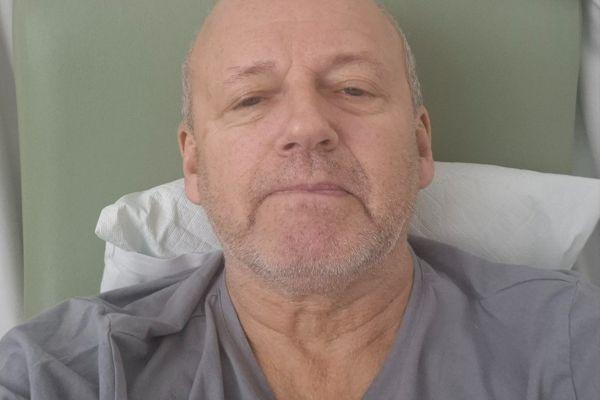
Andrew received direct injections of an immunotherapy drug known as atezolizumab for five weeks prior to having his bladder surgically removed Photo: Submitted

3. Contributed
The lifelong Sheffield United fan said the trial could help future generations Photo: Submitted
4. Contributed
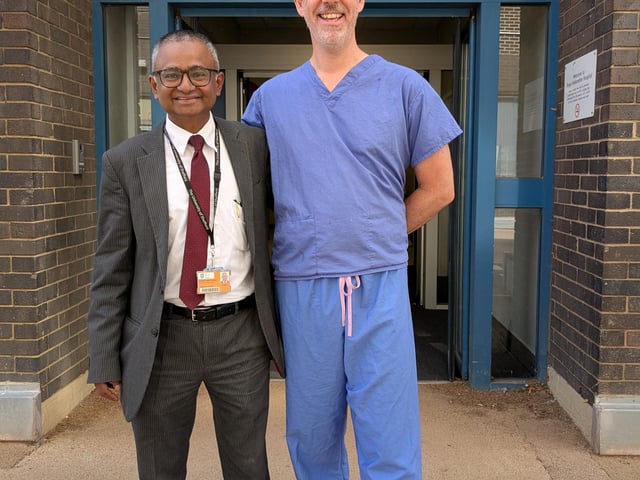
The £2.5m trial has been brought to Sheffield thanks to a collaboration between urology and oncology medical specialities at Sheffield Teaching Hospitals Photo: Submitted