
'Guys don't talk' - boxing legend Johnny Nelson on prostate cancer 'stigma' and risks to black men
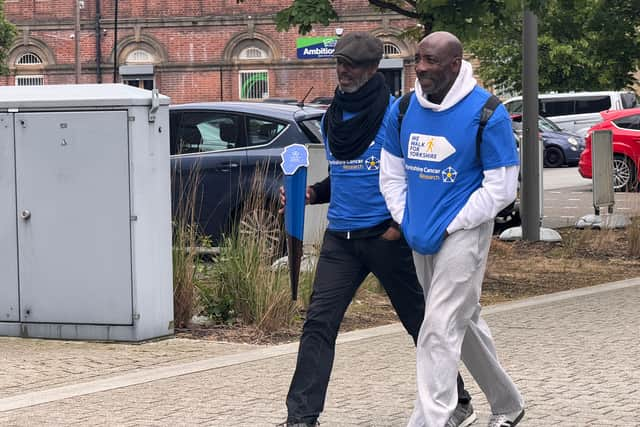
Earlier this week, we spoke to Johnny Nelson who accompanied his friend Aaron Casserly-Stewart on part of Yorkshire Cancer Research’s We Walk For Yorkshire campaign. We spent some time speaking about cancer, in particular prostate cancer amongst black men and the conversation certainty struck a chord with Chris Hallam.
Prostate cancer is the most common cancer among men in the UK. 1 in 4 black men will get prostate cancer. That's double the risk of other men. That is a fact.
Even more alarmingly, black men are more than twice as likely to die from it. Men like you, just like me (a male of mixed heritage).
“As a black man there’s a stigma attached,” Sheffield boxing legend Johnny Nelson says, pausing for a moment.
Taking the threat of something like prostate cancer seriously is something that’s all too often dismissed by men, particularly black men.
I will admit to having included myself in that (foolish) assumption in the past. There remains all too often a certain bravado or dismissive attitude, almost as if it doesn’t feel ‘manly’ enough to undergo, what is essentially, a routine check-up to make sure they don’t have it. In truth, it’s a fear of being seen as weak.
“I’ve got a friendship group on WhatsApp,” Johnny says. “I’m saying, ‘boys, come on. Let’s get ourselves checked’, because this is real. It’s not always happening to somebody else.”
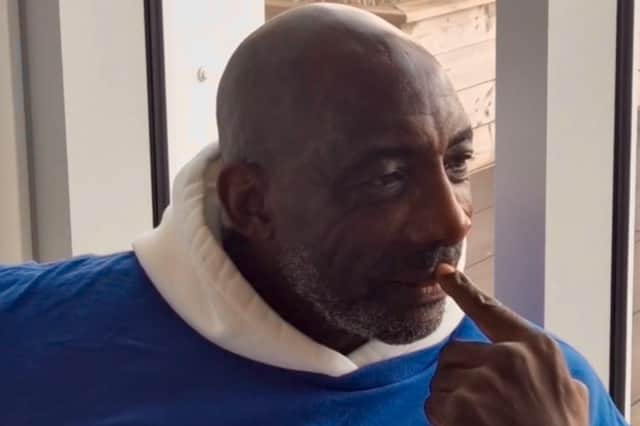

If anyone can speak about this with such passion, Johnny can. He lost his stepfather to prostate cancer and his biological father to lung cancer, he also witnessed friends experience the difficulties that come with a cancer diagnosis.
The emotional and lingering effects of these experiences spurred him on. Forced him to beat down that invisible wall that until then had stopped such important conversations from happening.
“I said ‘let’s do this’,”Johnny says. “A couple of guys, I said, ‘I tell you what, let’s go in pairs. Let’s go together. It takes the sting out of it, we can have a laugh about it’.”
Johnny went for the check up, and when he told his friend that he’d been, he started laughing. ‘Why didn’t you tell me what it was like?” he asked.
His friend told him he didn’t go into detail because he knew Johnny wouldn't have gone. Johnny said: “You’ve got to take the stigma away.”
As a male of mixed Black ethnicity who is in his early 40s, I may be at an even higher risk of prostate cancer than other ethnicities. But not enough is known, it is only in recent years research has resumed looking into the risks that black men face.
“When the conversation started, I found out one of my friends had his prostate removed a year and a half ago, says Johnny.
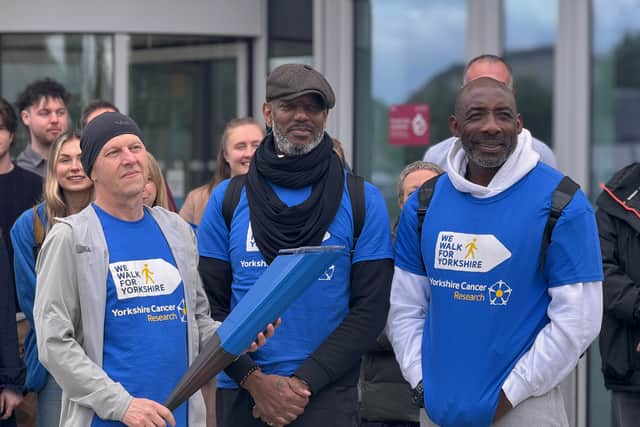
Johnny’s friend Aaron was diagnosed with stage three cancer in April 2024 and chose to have surgery to remove his prostate. Although he recovered well from the surgery and is now having regular checks to monitor his health, he has experienced challenging side effects.
Aaron said: “Finding out I had prostate cancer was a real shock. I was talked through different treatment options but opted for a prostatectomy because, in my mind, I just wanted it gone.
“I decided to speak publicly about my diagnosis because all men need to be made aware, especially black men. It’s more prevalent in our community, but we don’t like going to the
doctors or talking about health issues like cancer.
“It’s so important to encourage open conversations.
“If I’d been diagnosed earlier, I might not have needed surgery and could have considered less invasive treatments, or active surveillance, which means you have regular check-ups.”
It’s never an easy subject to discuss, but it’s a necessary one to begin. If only to be aware and also to ensure other people do not feel awkward talking about it.
Sure, it may feel awkward going for a check-up in the first-place but it’s best to be safe. As for the associated stigma, misconceptions that may be connected with seeing a medical professional about this, a few moments of discomfort does not outweigh the relief of a positive prognosis or responsible action.
I’m 42 now, it’s advised that men get checked from the age of 45. I’m going to get seen sooner rather than later because there are still risks. If you’re a black man or biracial heritage and around my age, perhaps you should too.
For more information see: https://prostatecanceruk.org/
Find out more info about Yorkshire Cancer Research’s vital work in funding further research: https://www.yorkshirecancerresearch.org.uk/