
'Breast cancer changed my life - now I want to help others' says mum who dedicated life to cancer research
After being diagnosed with stage 3 breast cancer while studying at the University of Sheffield, Emily Lunn turned her experience into ground-breaking research to help women in Yorkshire access life-saving screening.
The mum-of-two began studying Sociology and Social Policy at the University of Sheffield in 2016, but her life and studies took an unexpected turn just months into her course, when she was told she had stage 3 breast cancer.
In April that year, Emily went to her GP after noticing nipple discharge.
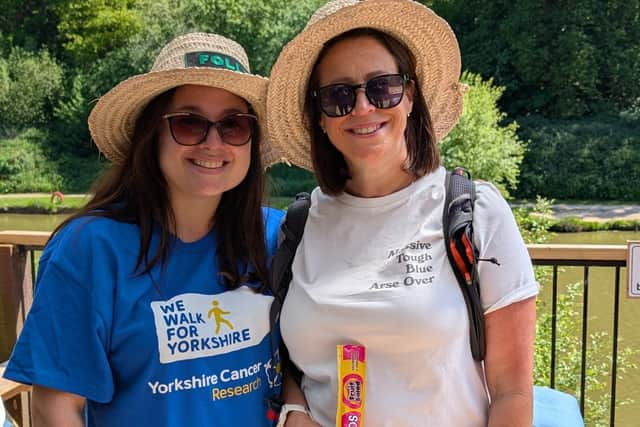

Although it disappeared, she later found a lump and returned to her doctor.
“It was October – Breast Cancer Awareness Month – and I kept seeing information about breast cancer, so I thought I’d better get it checked,” she said.
“They did an ultrasound, then a mammogram and three biopsies. Even with so many people coming in and out of the room, I didn’t think much of it and went straight back to my university lectures that day.”
A week later, Emily received the devastating news.
“It was like a train had hit me. So many questions raced through my mind. Am I going to lose my hair? Will there be lots of needles? Am I going to lose my identity?
“The shock of it all lasted throughout my treatment. All I could think was I needed to get through it for my two boys. My eldest was just nine at the time.”
Emily began treatment straight away - six rounds of chemotherapy, surgery, 30 sessions of radiotherapy and a year of targeted cancer drugs.
Despite the intense treatment, she continued her studies.
“When I was diagnosed, I decided I wanted to use my experience to shape my research and wrote my dissertation on young women’s experiences of breast cancer,” Emily explained.
“I had an extra year to complete my studies but continued to go to university throughout my treatment. That time was a whirlwind.
“I also ran my first half marathon and did lots of charity fundraising. I tried to find positives wherever I could.”
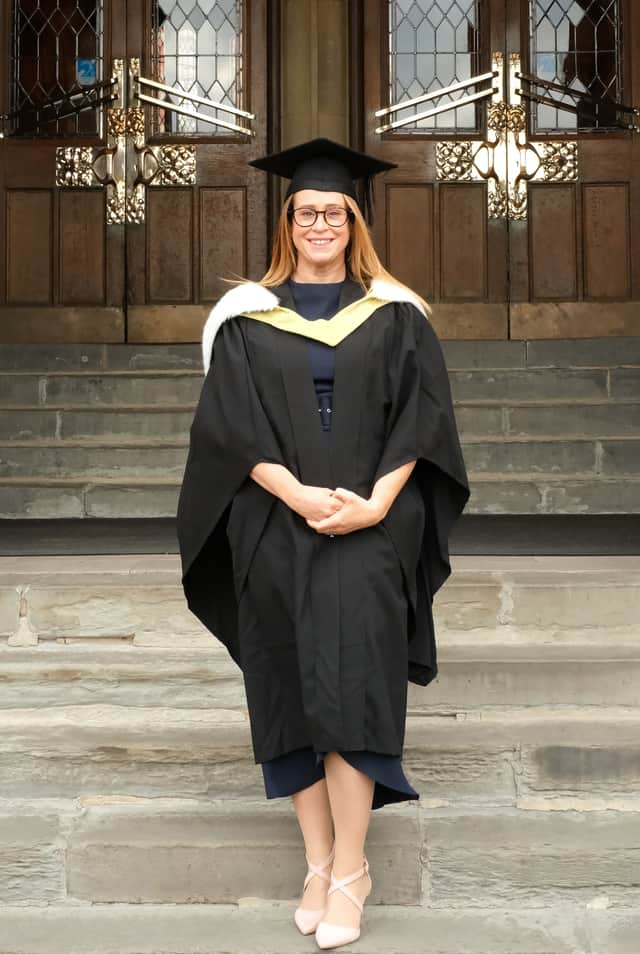
Every day on her way to radiotherapy at Weston Park Hospital, Emily passed the steps of the university where graduates took photos in their caps and gowns.
“Every time on my way to radiotherapy at Weston Park Hospital, I passed the steps of the university’s watching people in their graduation caps and gowns. I made it my mission to finish treatment and stand on those steps,” she recalled.
Emily completed her treatment in 2018 and graduated in 2020, but due to the pandemic, she finally stood on those steps two years later.
She was determined to keep working in cancer research to help others facing the disease.
“Doing well in my degree alongside treatment confirmed that cancer research was where I belonged,” she said.
“After treatment, I struggled with my mental health and fears of recurrence.
“I used coping strategies, like journaling my symptoms and reading breast cancer information.
“But I knew many people don’t have access to the same resources and support I did. That’s when I decided my next work should focus on addressing that.”
In 2020, Emily began a PhD in cancer health inequalities at Hull York Medical School, funded by Yorkshire Cancer Research.
Her work is part of TRANSFORM, a £5.2 million programme that studies why cancer outcomes vary across communities in Yorkshire and beyond.
Emily focused her research on why women from different socioeconomic backgrounds attend - or don’t attend - breast screening appointments.
“Through conversations in many communities, it quickly became clear that the challenges women face in attending breast screening is very complex,” she said.
“It’s never as simple as just deciding not to go. Everyday pressures including caring responsibilities, shift work and financial insecurity, often mean women feel they can’t take the time or risk losing income to attend appointments.”
She also found that language, education and culture affect attendance.
“Women aged over 50 from Roma and some South Asian communities are less likely to have attended formal education, meaning they may not understand why breast screening is important,” she explained.
“Even when leaflets are available, they’re often inaccessible. NHS breast screening leaflets are available in 30 languages, but in my area alone, there are around 100 different languages spoken.”
Personal beliefs and modesty concerns also play a role.
“Women often put their family’s needs first and delay their own healthcare. Concerns around modesty, fears that breast screening might be painful, or anxiety about what might be found are also very common,” Emily said.
To help raise awareness, Emily created an educational ‘Snakes and Ladders’ game showing the barriers and motivators for attending breast screening.
She tours a life-sized version across Yorkshire, including a recent event at the Thackray Medical Museum in Leeds.
“I get the greatest satisfaction when speaking directly with communities across Yorkshire. By creating safe spaces and having open conversations about breast cancer, we can show why attending appointments matters – helping more women attend, increasing early diagnosis and ultimately saving lives,” she said.
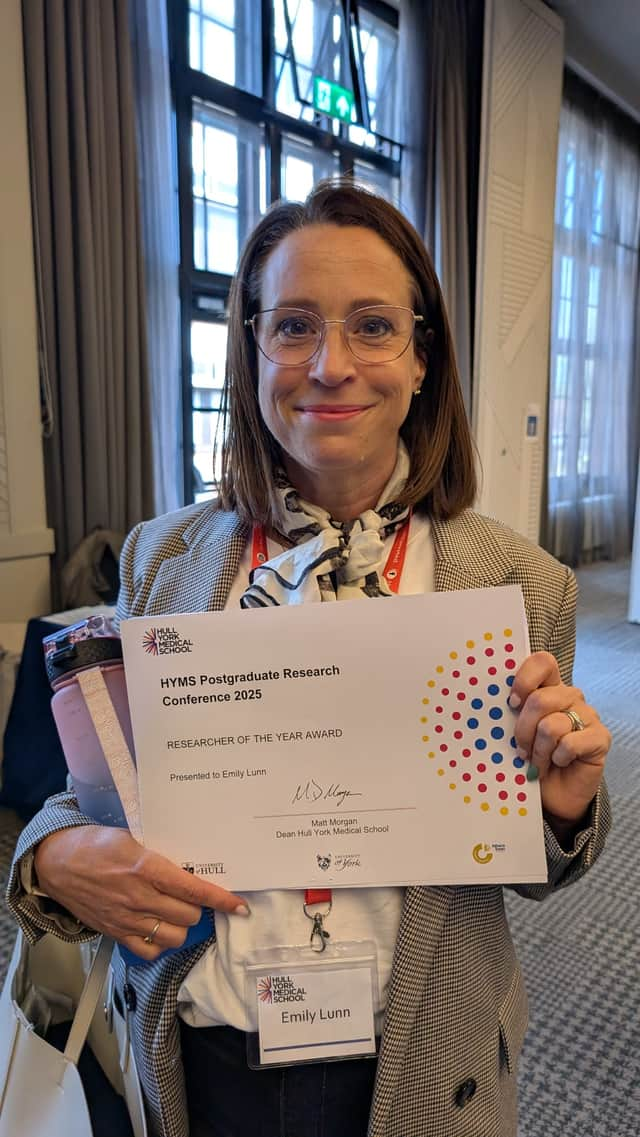
Earlier this month, Emily submitted her PhD and was named Postgraduate Researcher of the Year at Hull York Medical School. She hopes her findings will lead to more inclusive breast screening in Yorkshire.
“Breast cancer changed my life, but with Yorkshire Cancer Research funding, I hope my research will help change the lives of others. Currently, there is a one-size-fits-all approach and the system doesn’t cater for the needs of different Yorkshire communities,” she said.
“I hope to see a more inclusive and flexible system, for example cultural awareness training, options to protect modesty, and accessible breast cancer resources.”
Now, Emily is working with researchers at the University of York to improve early cancer diagnosis among Gypsy, Traveller and Roma (GTR) communities in Yorkshire, again supported by Yorkshire Cancer Research.
Two years ago, Emily faced another health scare when she was diagnosed with endometrial cancer.
Thankfully, it was caught early, and she had a hysterectomy to prevent it returning.
“It certainly was a shock to be told I had another type of cancer. Life is filled with unexpected hurdles, but I’m living proof that advancements in research mean cancer doesn’t have to take everything from you,” she said.
“I just want to do what I can to help other people live better lives – and I thank Yorkshire Cancer Research for helping me do that.
“Yorkshire’s rich culture and diversity is what makes this region so special but that doesn’t come without its challenges. Cancer research must happen here to understand our region’s unique needs.
“Without Yorkshire Cancer Research funding, I might have moved down south to do my PhD. My oncologist was also funded by the charity. It’s vital Yorkshire attracts the cancer researchers and clinicians needed to save lives.”
To learn more about cancer screening in Yorkshire, visit: Screening for cancer – Yorkshire Cancer Research