
Behind the scenes at Sheffield's best school with the longest waiting list for places in the city
It’s one of the best schools in the country and it’s right here in Sheffield - we visited and found out exactly why
Mercia School in the city’s southwest - with its unashamedly strict ethos - shot to fame in 2023 when it was found to be number one in the country for disadvantaged progress.
And from September, children from Southey Green, Parson Cross and nearby neighbourhoods will return from the summer break and their school - formerly known as Chaucer - will be called Mercia Northridge and hopes are that it too will prove just as successful.
Teachers in charge of Sheffield’s most sought-after school, Mercia, say they are currently preparing to “level the playing field” and transform Chaucer into a school which its community can be “proud” of.
Chaucer is one of the most underperforming schools in Sheffield - in which 57 per cent of children are eligible for free school meals and the progress score for disadvantaged students is the second lowest among all city academies.
In 2025, its soon to be stable mate, Mercia School, was in the top two per cent for attainment - competing with the nation's most famous private schools and selective grammars.
In exam results from the same year 20 per cent of Mercia’s sixth form students attained A*, 47 per cent scored A*-A and 72 per cent had A*-B.
An impressive 13 per cent went on to study medicine, while seven per cent were bound for Oxbridge and 52 per cent to Russell Group universities.
It is now the most over-subscribed school in Sheffield - with 248 children on waiting list for next year's Year 7.
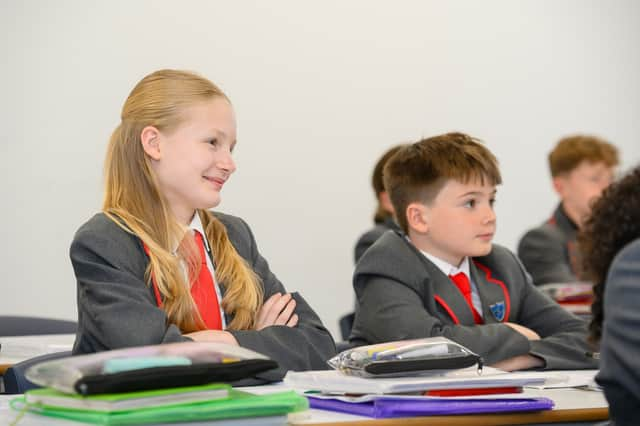

Speaking about the upcoming transfer, Merica Learning Trusts’s CEO Neil Miley says children in the north of the city “deserve” a good education, adding: “We’re going to make sure that happens over the next few years.”
Ahead of the transition, The Star paid Mercia a visit for a look behind the scenes at the city’s best performing school.
Reporter Ben McVay writes:
While having a quick coffee, I met the school’s head chef Chris Willmot in the “family space” (otherwise known as the canteen in most schools) where pupils take part in “family dining”.
Children sit in groups with a teacher and take turns serving and clearing away with discussion topics on a board in case conversation dries up.
Interestingly, Mercia school dinners are vegetarian to deliver healthy food to budget.
On the menu when I arrive is sweet potato, butternut squash and chickpea curry, garlic and coriander flat bread, steamed rice, mango chutney, and minted yoghurt - unfortunately I was called away before lunch.
For those not eligible for free school meals dinner comes to £2.61 per pupil, plus breakfast cereal and fruit at break and in the afternoon.
Mercia’s unapologetically strict behaviour policies have long been at the centre of debate about the balance between freedom of expression and academic achievement, particularly on social media.
Among various criticisms levelled at Mercia is what one commentator called “spoon-feeding” information, however the school says it actively promotes “direct instruction”, or what CEO Neil Miley calls a “solid base of knowledge”.
Speaking about its methods, executive director of secondary standards Dean Webster said: “The school is knowledge-rich.
“All our teaching is evidence-informed. It’s what brings about the best performance - especially for the most disadvantaged and vulnerable children,” said Dean.
"Our approach follows evidence of the brightest-performing schools which essentially give kids the grades which is currency as we know.
"If we truly want children to break out of poverty then they need those grades to go onto post-16 study.”
Dean calls years 7, 8 and 9 “wasted years” in many schools - where there is an effective lull post-primary SATs. He said: “We capitalise on the work in primary and the level of challenge rises, rather than dipping.
“That’s essentially where this school gets its real progress from - by ensuring children have a challenging curriculum from 11 or 12 years old.”
Working off a theory first coined by French sociologist Pierre Bourdieu in the 1970s - that middle class schoolchildren are more likely to benefit from “cultural capital” at home - Dean says Mercia tries to level the playing field.
He said: “We treat everyone at the same base, so we give that knowledge rather than, as we see at some schools, teachers asking children what they think something means.
“Those children with knowledge capital from home can fill in the gaps and those who do not, cannot. So it’s explicit teaching.
“We can’t get away from the fact that nationally and in this city the gap between advantaged and disadvantaged pupils is huge.”
At 10am it’s time for a walk around the school where I notice toilets with no exterior doors into the corridors - a deliberate measure to eliminate “bullying hotspots”.

I witness the now-infamous lesson changeover during which pupils walk, books in hand, on the left-hand side of a central red line and conversation is limited to “good morning” or “good afternoon”.
The books are carried, explains Neil, to save wasted “minutes” packing and unpacking bags at the start and end of lessons - which multiply over the course of five years.
Thinking back to my school days at an institution I’ll not name, the contrast between that angst-filled chaos and the calm orderliness as the polite young people smile and greet me is staggering.
Entering the first classroom to observe some teaching triggers alarming sense memories and the bitter taste of cortisol from the late 80s and early 90s.
While I’m still focusing on calming my my fight or flight response Dean explains what’s happening in the room as a Year 7 English teacher cries “best!” and all the kids straighten their backs with arms folded against chests.
What seems quite a bizarre ritual to me is actually the teacher calling attention to an important point, which he then checks all pupils have retained by asking the whole class to repeat it out loud.
Speaking about the school’s “warm-strict” ethos, Dean said: “Relationships are really strong. When we started this there were very few examples of it in the north of England.
“But we’ve shown it makes a massive difference - we create the society in our own school.” Dean and others hope this is something they can take with them to Mercia Northridge.
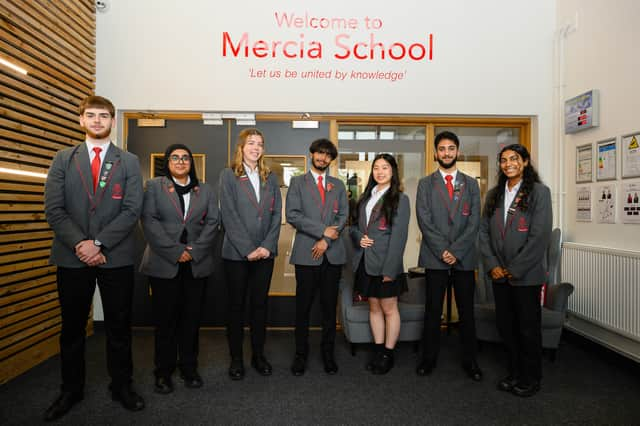
Elaborating on the school’s methods, Dean tells me: “Behaviour is a major problem in this country in schools. We’ve seen what’s happened recently in our home city.
“So the transition between lessons is the time when bullies can take aim. This is a calm transition where children get to learning as safely and quickly as possible.
“We’re proud to have a culture where bullying is extremely rare. Children feel super safe and that’s the driver.”
Mercia pupils are in class from 8.30am until 5pm Monday to Thursday and until 3.45pm on Fridays. The early start is dedicated to non-curriculum reading - with pupils reading 85 books from Year 7 to Year 11.
They have access to literature such as Barack Obama’s autobiography in Year 10 and Lord of The Flies in Year 9.
During the extra time at the rear end of the day, pupils take part in “cultural enrichment”, including sport, performing arts and importantly, homework.
“In other schools it’s the kids you really want to stay that go home”, said Dean. “So we’ve made this school compulsory in all those elements. We just do it all in school so it’s done.
“So when the children go home at 5pm they’ve got their work-life balance and so have our teachers.”
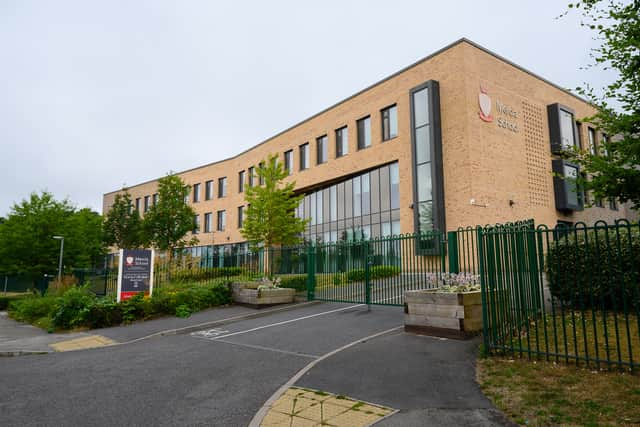
Mercia is a strong advocate for the English Baccalaureate (EBacc) - a set of core GCSE subjects including maths, English, history or geography, science and a language.
This is in contrast with modern academies offering specialisms in for example sports or technology.
Dean said: “We think it’s an academic pathway and we don’t want to put glass ceilings inline for children based on their primary performance or background.
“We’re saying every child in this school can go to an elite university and have a top job - we’ve just got to break through that barrier, which means we’ve got to give you grades to get to the next stage.”
Looking forward to September, when Chaucer School becomes Mercia Northridge, Neil said: “The school unfortunately has a reputation that precedes it that’s not actually warranted.
“The children feel that and the staff feel that. The aim will be to introduce some of the practices that work successfully here because we believe in life chances for children.
“It’s around giving children opportunities and options at the end of Year 11. Too many schools don’t have a broad enough curriculum to make sure they have choices.
“We don’t want to narrow the curriculum to reduce options. We are going to make sure the curriculum is broad and balanced.”
Dean added: “The performance of the school, as everyone in the city knows, has been way below national ratings. We’re prepared to put our reputation on the line to achieve something better.
“Chaucer’s the only school in the city with lots of spaces because the community are not choosing it. This school is the most popular - so we have a mandate to make a difference there.”
- RELATED: Ofsted praise 10 Sheffield schools and nurseries in latest ratings
- RELATED: Ideas for old pop museum pour in as university mulls 'options'
- RELATED: Sheffield school "delighted" as they celebrate latest Ofsted report
- RELATED: Sheffield primary school praised for "happy, safe and secure" environment by Ofsted