
Under-16s social media ban risks false sense of safety as consultation launches, research suggests
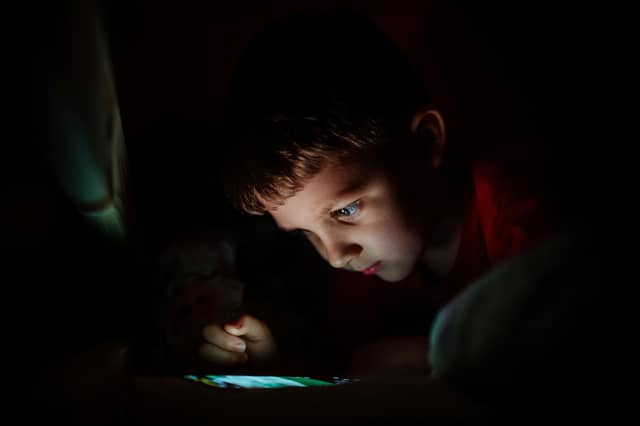

As the UK government launches a public consultation on banning under-16s from social media, new research suggests the policy may offer a false sense of safety rather than real protection for children.
A survey of 1,000 UK adults conducted by The Harris Poll UK, a Stagwell company, found that while 78% support banning under-16s from major social media platforms, many doubt the policy would work in practice.
Instead of reducing online risks, the public expects teenagers to find ways around restrictions, potentially pushing activity into less visible and harder-to-regulate spaces.
Public expects ban to be bypassed
Three quarters of adults (75%) believe under-16s would lie about their age or use fake identification to access platforms. A further 72% expect teenagers to find technological workarounds, while 67% say a ban could push young people towards more dangerous online environments, including the dark web.
The findings suggest widespread scepticism that restricting access alone would significantly reduce digital exposure.
Researchers describe this potential shift as “digital displacement” — where behaviour does not stop but simply moves elsewhere.
Activity likely to shift, not disappear
If mainstream social media platforms were restricted, respondents anticipate teenagers would migrate across the digital ecosystem.
- 63% expect young people to move to encrypted or private messaging services
- 60% anticipate increased time spent on online gaming platforms
- 59% expect greater use of streaming services
- 56% predict a return to SMS communication
- 27% believe shopping apps could emerge as new social hubs
Rather than disengaging from the online world, the public expects teenagers to adapt quickly.
Protection supported — but not total exclusion
The research also highlights a nuanced public view.
While 89% say children’s safety online should be the priority, two-thirds believe young people should not be excluded from the digital world entirely. A further 72% say social media is not uniformly harmful.
Opinion is divided on influence, with half of adults saying social media has too much impact on under-16s, while the other half describe its impact as moderate or limited.
Accountability seen as the bigger issue
Although support for a ban is high, the research suggests stronger regulation of technology companies may be a greater priority for many.
Eighty-six per cent of adults believe regulators are too weak in holding technology firms accountable, with similar numbers calling for tougher enforcement of existing rules.
Concerns extend beyond content to platform design, including algorithm-driven feeds, rapid interaction features and frictionless content discovery.
TikTok is viewed as the highest-risk platform, cited by 72% of respondents, followed by Instagram and Snapchat.
Steve Brockway, Chief Research Officer at The Harris Poll UK, said:
“Banning under-16s from social media may feel decisive, but the public is sceptical about whether it would deliver genuine protection. Our research shows people expect behaviour to reroute rather than stop.
“What emerges is not opposition to protecting children, but concern that access restrictions alone are unlikely to address the systemic design choices that drive harm. Without stronger accountability, the risks may simply shift elsewhere.”
As the government gathers evidence through its consultation, the findings suggest that while voters may back bold action, many are already questioning whether a ban would be enough.