
'Support dogs Harley and Lawson have been better than carers'
If more people had assistance dogs, less people would need to go into the care system.
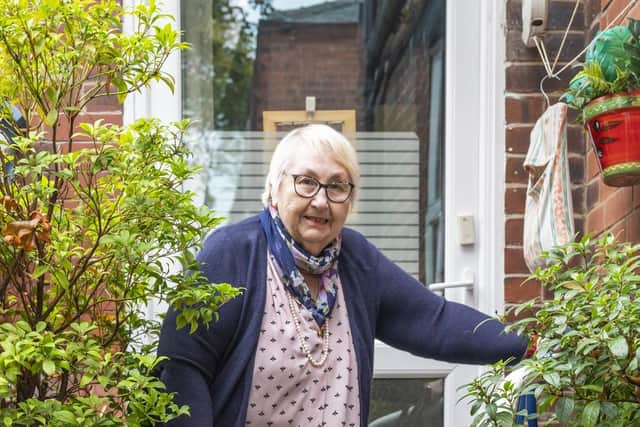
That is the view of June James, a 77-year-old former social worker who has benefitted greatly from having a disability assistance dog over the past 10 years.
The mother-of-two has had two pooches trained by the Sheffield-based Support Dogs charity, to empower her to live independently despite spending years battling osteoarthritis and Multiple Sclerosis (MS).
June, from Hillsborough, is living and working with support dog Lawson, a Fox Red Labrador who has become her right-hand-dog, picking up dropped objects, helping her to get dressed and undressed, opening and closing doors and even loading and unloading the washing machine.

Lawson, who alongside June qualified as an official Support Dogs partnership earlier this year, is June’s second support dog, taking up the lead from her previous canine aide, her beloved pet dog Harley, a Cocker Spaniel who was trained by the charity 14 years ago.
Harley died aged 15 in September last year, just two months before June’s partner, Mac Dewsnap passed away aged 80.
June, a grandmother-of-four and great-grandmother-of-two who left her social worker job aged 54 due to her condition, said: “I’m sure there are people who have gone into care who needn’t have, because these dogs are indispensable for the elderly.
“If things were different, I would be saying everyone ought to have one. They wouldn’t have to go into care, as long as they could manage a dog, and not necessarily a big dog – someone like Harley. He was like a person to me – he was so good at his job. They are better than carers.”
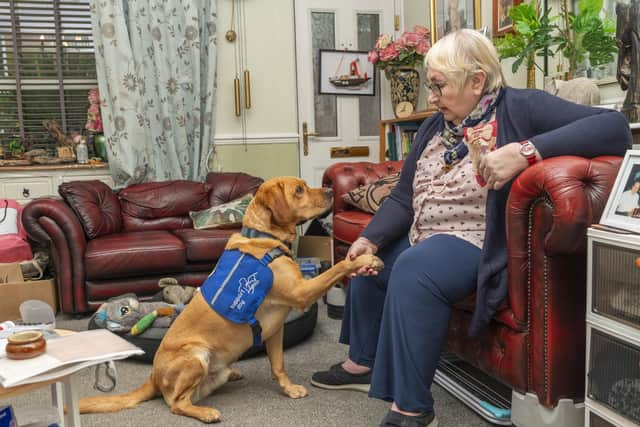
She added that Harley was also a source of great comfort when Mac went into care.
Statistics from the 2023 Support Dogs Client Survey reveal that almost two thirds of respondents on the charity’s disability assistance programme classed their support dog as their main medical aid.
And 100 per cent said their care needs have reduced, while two thirds reported a reduction in emergency calls and more than half reported a reduction in home visits by health workers.
June, who had previously been active and enjoyed walks in the Peak District, had suffered from “excruciating pain” from being in her late 20s, and would often fall over.
It wasn’t until she had an MRI scan around 20 years ago that medics confirmed she had MS and osteoarthritis.
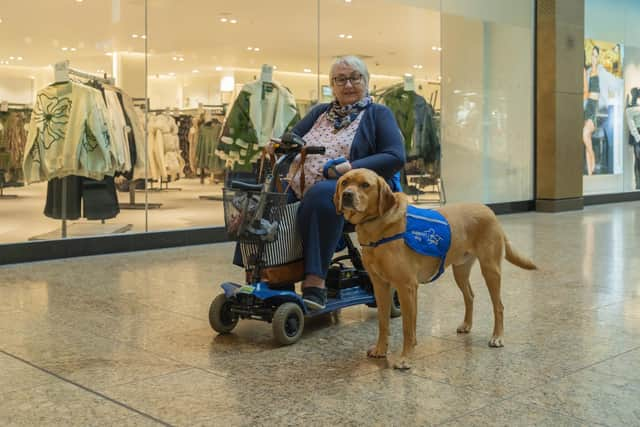
Her condition makes it difficult to bend, for instance to put her socks on or pick things up, and she uses a mobility scooter while out and about – with faithful support dog Harley, and now Lawson, walking alongside.
It was during an event in Hillsborough Park in 2010 that Harley was drawn to the dogs on a Support Dogs information stand. June found out more about the charity and set about getting Harley trained.
Within six months, he was a fully-fledged support dog. “It was marvellous,” said June.
“It gave him a purpose as a working dog and it greatly benefitted me.”
Harley retired at 11 and Support Dogs sourced and matched Lawson to June.
For a time, June lived with both dogs, while Lawson underwent his training.
“I did feel anxious about getting a second dog, but I’ve got the kind of MS that gets worse over time,” said June.
“I knew if I needed one now, I would certainly need one later on.”
June even thinks Lawson gave Harley a little boost in his final years, being an energetic friend.
“He lasted a little bit longer,” she said.
June spoke just weeks after Support Dogs – which also provides assistance dogs to help autistic children and adults with epilepsy - was granted planning permission for a new headquarters, near Hillsborough Stadium. The move will enable the charity to increase the number of dogs it trains and therefore the number of people it can help.
She added: “The charity has been indispensable for me. It’s an organisation that should grow, because the need for them is so large, and the need is increasing.”
To find out more about the work of Support Dogs, please visit www.supportdogs.org.uk or call 0114 2617800.