
Innovative treatments are improving outcomes for thousands with sight-threatening eye disease - local clinic supports AMD Awareness Month
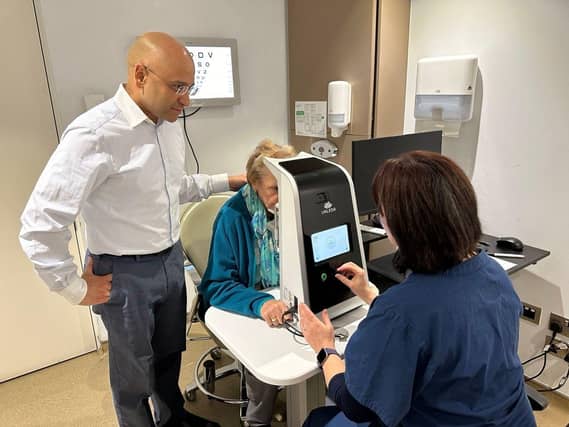

Latest treatments for Age-related Macular Degeneration (AMD) are giving hope to thousands of people living with the condition.
February is AMD Awareness Month, and recent research from Optegra shows that 63 per cent of patients with wet AMD who were not responding well to existing therapies improved or maintained their vision at a longer interval with a novel injectable therapy.
Ongoing advancements continue to bring new and improved treatment options for the future.
This is positive news, especially given that the number of AMD cases are increasing in our ageing population - around 1 in 200 people has AMD at age 60, and by the age of 90 this rises to 1 in 5[1].
AMD is the biggest cause of sight loss in the UK, affecting around 700,000 people[2]. That’s why for February’s AMD Awareness Month, Optegra Eye Clinic Sheffield is highlighting how innovative treatment options are helping patients manage this progressive condition.
As well as offering injectable therapy, Optegra also launched the first-ever active treatment for Dry AMD - a light-therapy using the Valeda system in 2024. Different wavelengths of light target the cells of the macula at the back of the eye to stimulate and improve their function. It is non-invasive with no drops or injections.
Consultant ophthalmic surgeon and medical retina expert at Optegra, Mr Sajjad Mahmood says: “Since launching Valeda light therapy we have treated 174 dry AMD patients, that’s 334 eyes, with initial findings showing promise as a treatment option. In our latest audit, 84% of eyes were stable or better after their first treatment cycle. The average gain in vision was one line on the sight test chart.
“And with our injection treatments for Wet AMD, we continue to exceed industry benchmarks with 63 per cent of our patients able to read 70 letters or more one year after treatment compared to 39 per cent nationally.”
Other notable developments in the treatment of AMD include:
- The rapid development of artificial intelligence (AI) which helps in the evaluation of retinal imaging of patients during their treatment journey ensuring treatments are optimal for each patient.
- New treatment options in development internationally for late stages of dry AMD with two products (Syfovre and Izervay) already in use in the USA showing positive results.
Mr Mahmood continues: “It is wonderful for me to now be able to offer some hope to my patients, whom previously I would have only been able to give dietary advice and encouraged them to stop smoking if they did so.
“We are very encouraged by the results we are seeing so far for our many patients.”
What is AMD?
AMD is a condition which affects the cells at the back of the eye (the macula), the central part of the retina that is responsible for detailed vision. It allows us to see fine detail for activities such as reading, recognising faces, watching television and driving. It also helps us to see colour. Early signs of AMD, when the macula breaks down, include a blurred or distorted area in the centre of your vision and straight lines appearing wavy.
There are two types of AMD…
Dry AMD, the more common of the two types, results in a gradual loss of central vision, so it becomes harder to read or recognise someone’s face.
Wet AMD can also result in central loss of vision and may be described by a patient as a dark or blurry spot in the middle of their vision or wavy lines.
Treatments
Dry AMD – light therapy reinvigorates macula cells
Wet AMD – eye injections control abnormal blood vessel growth
What are the causes?
The causes are currently unknown, however there are certain factors that can increase risk of the eye condition including age (particularly if you are over 65), a family history of the condition, if you are a smoker, if your diet is low in nutrients found in leafy green vegetables and if you have a disease which affects your heart and blood vessels.
Quick fire – true or false
Only people over 70 can get AMD
FALSE: Whilst age is a big risk factor, AMD can affect people in their 50s and 60s.
There is no cure for AMD
TRUE: Although AMD cannot be cured, early diagnosis and ongoing treatment can slow progression and preserve sight. Specialist monitoring and tailored treatment plans are key.
Supplements can cure AMD
FALSE: Certain supplements may help slow the progression of dry AMD in some patients, but they are not a cure.
Find out more at: www.optegra.com
Optegra Eye Health Care is a specialist provider of ophthalmic services. Established in 2007, with its first hospital opening in 2008, it has completed over one million eye procedures from its 74 eye hospitals across the UK, Czech Republic, Poland, Slovakia and Holland.
As well as providing private vision correction treatments – from lens replacement and laser eye surgery to implantable contact lenses – Optegra treats cataract surgery both privately and through its partnership with the NHS. Optegra also treats medical conditions AMD and glaucoma; and has launched the first ever treatment for people with the Dry form of AMD.
Optegra is owned by EssilorLuxottica, a global leader in the design, manufacture and distribution of advanced vision care products, eyewear and med-tech solutions. Backed by robust R&D investments, distinctive capabilities and a top-quality asset portfolio, the company drives innovation across eye health.
Optegra brings together leading-edge research, medical expertise and state-of-the-art surgical equipment. It performs more than 170,000 treatments annually, both private and publicly funded. Its top ophthalmic surgeons are renowned for their areas of expertise, offering excellent clinical outcomes
[1] Macular Society 2025
[2] Macular Society 2025