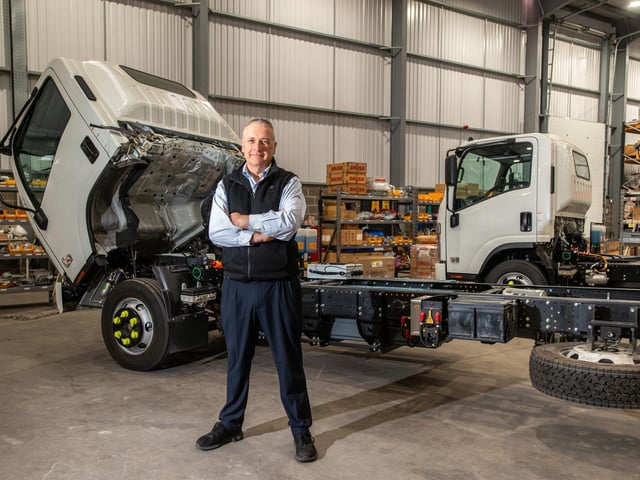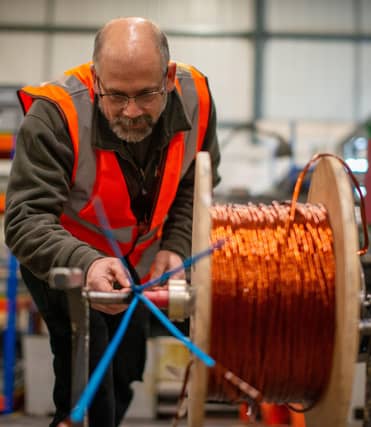

Marcus Jenkins, who founded Rotherham-based Magtec in 1992, says thousands of new diesel vehicles purchased in recent years could still be on the road in 2044.
He believes that fitting them with electric motors offers a sustainable, cost-effective alternative to scrapping them.
"Give me a five-year-old bus, and I’ll turn it into an electric vehicle with another 15 years of service life," says Jenkins. "A single electric bin lorry can cut emissions equivalent to taking 30 diesel cars off the road.
"Battery technology has improved, allowing us to put enough power into a 26-tonne vehicle to last a full workday," says Jenkins. These electric alternatives charge overnight with off-peak electricity, cutting both emissions and costs.
"Last year, over 200 of our electric refuse vehicles completed 1.3 million road miles," Jenkins reveals. “The refuse collectors prefer them too – the vehicles are quieter so workers can hear each other, and they aren’t inhaling tailpipe emissions either.
"New electric refuse trucks are expensive. Repowering existing ones costs less than half of buying new. The solution is already here – we just need some joined-up thinking to make it commonplace."
Jenkins’ comments come as a new report highlights the rapid growth of the UK’s net zero economy, with Yorkshire and Humber playing a key role.
Jobs boom
The report, commissioned by the Energy and Climate Intelligence Unit (ECIU) with analysis provided by the independent consultancy CBI Economics and The Data City, notes that the sector grew by 10% in the past year and is now worth £83.1 billion in Gross Value Added (GVA) to the British economy.
Employment in the net zero sector, provided by companies such as Magtec, has grown by 10.2% in the past year.
Net zero jobs provide a proportionally bigger boost in productivity to Yorkshire & Humber than they do anywhere else in the UK, with labour within net zero businesses estimated to be 77% more productive than the region’s average.
“When you repower a vehicle, you create jobs - not just in our factory but across the supply chain,” says Jenkins, with Magtec’s clients already including the British Army and London’s famous open-top sightseeing bus operator Tootbus.
Until recently, diesel buses qualified for fuel duty rebates, making them cheaper to operate. Only now are repowered buses beginning to receive government support. "Ideally, there would be no incentives at all, and decisions would be based purely on cost-effectiveness," Jenkins suggests.
"Back in 1992, I thought the electric vehicle revolution was upon us," Jenkins recalls. "Thirty-two years later, it's finally warming up.
"The technology is ready, the demand is there, and the benefits are clear - now we just need the support to make the transition happen faster.”