£50m nuclear fusion facility near Sheffield 'could be long-term solution to gas crisis'
The UK took a big step towards a ‘safe, sustainable, low carbon source of energy’ at the launch of a £50m research centre near Sheffield.
The Fusion Technology Facility will play a key role in developing nuclear fusion - the holy grail of clean power.
The site, on the Advanced Manufacturing Park, cost £22m to build and is set to install £28m of equipment as part of an international effort to crack the problem.
It comes as the UK battles another energy problem: soaring natural gas prices which could spell much higher bills for millions of people this winter.


Head of the FTF Damon Johnstone, said: “There is an urgency about energy. The gas crisis is a clear sign something has to change.
“There are a lot of solutions on the table but nothing can meet demand in the same way fusion could. It will solve the problem for the next millennium.”
He also insisted it was ‘very safe’ and ‘very, very different’ technology to traditional nuclear power.
He added: “We’ve got to win hearts and minds. When any power station is built in any area there is opposition. But the more people learn about fusion they happier they will be.”

Every bit of space in the building was now spoken for, he added.
The centrepiece will be the Chimera facility being constructed by engineering firm Jacobs. It will develop fusion core components that can survive extreme temperatures and magnetic fields.
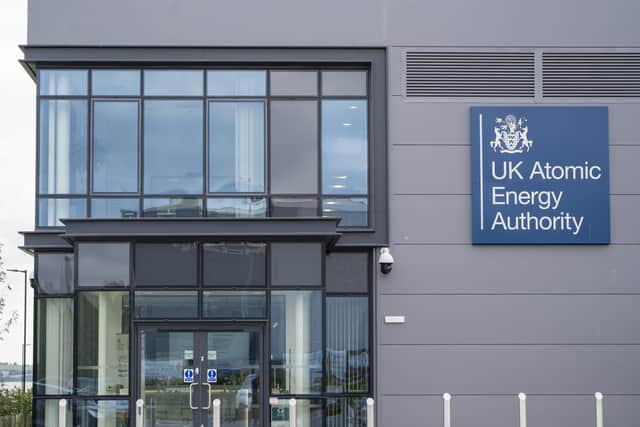
The FTF is part of the 2,000 strong UK Atomic Energy Authority.
Chief technology officer Tim Bestwick said there were many technical challenges but they were convinced fusion would work and provide ’safe, sustainable, low carbon, global energy’.

They had set up in Rotherham to take advantage of local expertise including at the Nuclear Advanced Manufacturing Research Centre, part of Sheffield University.
The first prototype power plant could be ready by 2025, ITER in France, and the first prototype hooked up to the grid in the UK in 2040.
He added: “The stakes are so high that’s it’s worth this big effort.”
Fusion uses seawater as fuel, not radioactive uranium, its waste has low radioactivity and a 12-year half life, not thousands of years like plutonium.