
Wave of new style 21st century 'phone boxes' with nod to tradition lined up for Sheffield sites

New ‘kiosks’ would have a physical phone and roof
A new wave of public callbox style payphones are being lined up for the streets of Sheffield.
BT have been removing call boxes in recent years and replacing them with what they have called street-hubs which offer a range of benefits including free ultra-fast WiFI, free emergency calls and rapid device charging, but have no handset, walls or roof.
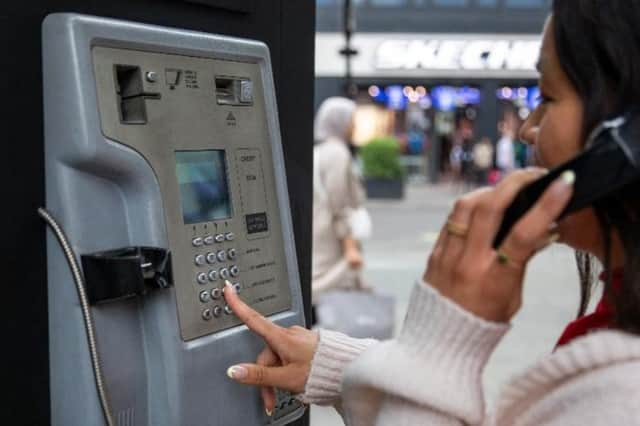

But now another company has drawn up plans to roll out a new type of phone box, which they say retains the heritage of the famous old style box and has a vandal -resistant telephone inside, complete with an ‘armoured cord’ handset.
New World Payphones has asked Sheffield Council to give them permission for six of their new phone boxes to be put in place in sites in and around the city centre.
They would be one at each end of The Moor, as well as one on each of The Wicker, High Street, Arundel Gate, and Queens Road.
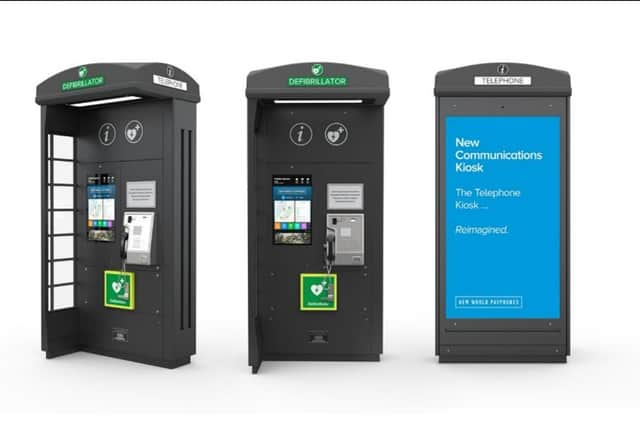
The new style ‘boxes’ would not be entirely enclosed like traditional ones, but would have a see-through wall on one side of the telephone, and would allow you to pay with your bank card, rather than coins.
They would also have an advertising TV screen on the outside, and a medical defibrillator machine, which could be used as an emergency treatment for heart attack victims. They would also have interactive information about where you are and how to get to places.
Pictures included in a statement, which NWP have sent to officials as part of a planning application, have show how the new phones would look, with elements of old fashioned phone boxes retained in the roof and the wall.
They said in the document: “The communication kiosk has been carefully designed to combine modern functionality with Britain’s design heritage, creating a structure that is both distinctive and contemporary. Its form reflects the traditional telephony kiosk while introducing a sleek, open-access design that integrates seamlessly into the streetscape.”
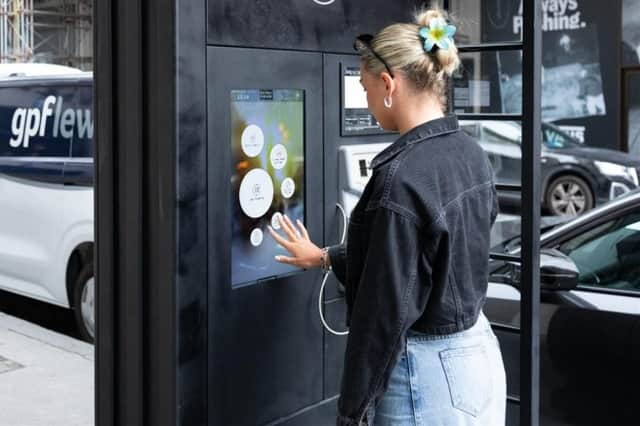
They added: “Public call boxes are more than just a convenience —they are a lifeline for those who need them most. In communities where mobile coverage is unreliable or where individuals cannot afford a mobile phone, these kiosks provide essential access to friends, family, helplines, and emergency services.”
They stated that In the year to May 2020, 150,000 emergency calls were made from phone boxes, including 25,000 to Childline and 20,000 to Samaritans.
“Traditional kiosks, while iconic, have faced challenges such as limited accessibility, outdated payment systems, and occas ional misuse. Our new design addresses these issues head -on, creating a safer, more inclusive, and future -ready solution,” they added.
BT will not give out figures for the number still on the streets of the city and will not comment on specific payphones.
But it is understood the company has nearly halved the number it operates nationally in two years. Earlier this year there were around 12,000 operational public payphones across the UK. This is down from around 20,000 two years ago. In their place they have been installing their new ‘street hubs’.
The original red phone box was designed by the famous designer Sir Giles Gilbert Scott, who won a Post Office competition in 1924. It became an instantly recognizable symbol of Britain, although it was changed slightly in the 1930s. A simplified red phone box was introduced to the streets in the 1960s.
After it was privatised in 1985, BT brought in new designs because of concerns over vandalism.