
Abbeydale Industrial Hamlet: Plans revealed for playground at famous Sheffield visitor attraction

Plans have been revealed for a new children’s playground at one of Sheffield’s best known visitor attractions.
Sheffield Museums Trust has filed a planning application to build the facility within the grounds of Abbeydale Industrial Hamlet, as part of changes that they want to make to the historic venue.
The documents also outline improvements that the organisation would like to make inside its ‘welcome hub’.
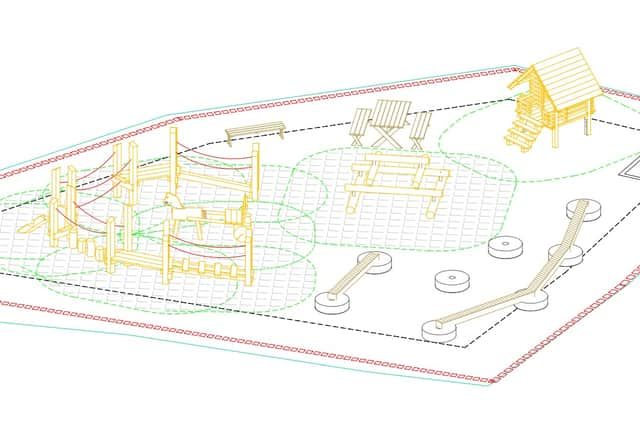

A planning statement outlining the work they would like to do, by Chris Hill Architects, said: “The proposed play equipment is to be installed as part of a wider scheme of site improvements under the ‘Embrace Abbeydale’ project, which aims to deliver on a recent grant award from the National Lottery to improve the museum experience and attract new visitors to the site.”
They said they had carried out archaeological investigations to find where the best place would be to put the play equipment, and added: “The design of the playground has been prepared by a specialist local supplier - Timberplay. The agent understands the design conform to relevant British Standards in relation to playground design, and shall be installed by the supplier.
“The addition of the playground will be an important amenity for smaller children to enjoy the site, and encourage visitors to this nationally important heritage site. “
Pictures drawn up of the playground by Timberplay show items including a ‘climbing trunk’, a walk rope, balancing beam, stepping logs, a bridge, and a climbing pyramid, a timber house on stilts, and a wooden horse and cart.
As well as improving their ‘welcome hub’, the trust is looking to create more parking space at the attraction as part of the improvement plans.
Abbeydale Industrial Hamlet is made up of a unique collection of 18th and 19th-century buildings and machinery associated with the production of agricultural tools. The site is both a scheduled monument and includes several grade II listed buildings.
In 1970, it was transformed into a museum, which has been described as one of the earliest industrial heritage attractions in the UK.