
Review: Pretty Woman, The Musical at the Lyceum, Sheffield
It must be tricky adapting a much-loved movie for the stage.
Do you rehash, or rework? Will audiences find it samey? Not similar enough?
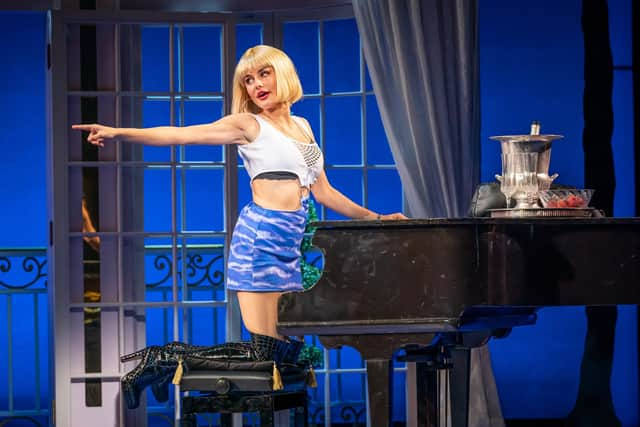

Pretty Woman The Musical, at The Lyceum in Sheffield until Saturday, September 28, is not so much an adaptation as a carbon copy of the 1990 all-time-favourite film.
The wigs are the same, the costumes the same and, to the gratification of anyone who knows the entire script by heart (most of the theatre audience of 40-plus-year-old females), whole sections of dialogue are the same, lifted verbatim from the screen.
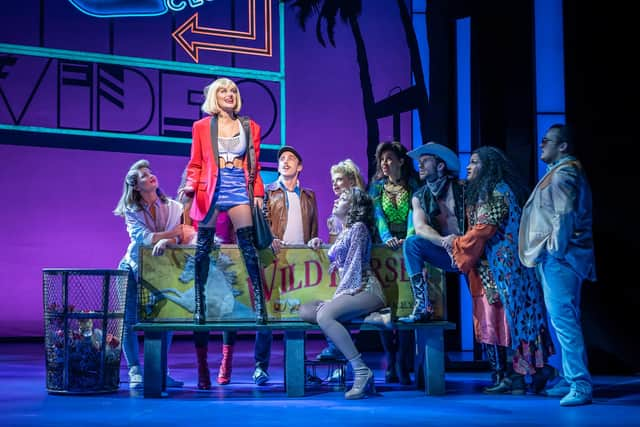
But beneath the surface, and like the Disney-esque cut-out set design, the stage version feels somehow one-dimensional. Yes, there’s enough froth, romance and iconic one-liners – “Big mistake! Big! Huge!” / “The pressure… of a name…” / (though strangely no “Stay cool”, “Fifty bucks, grandpa”, or the steaming divot…) – to make it a crowd-pleasing girls’ night out.
Understudy Rebekah Bryant – in the place of Love Island winner Amber Davies – and theatre actor Oliver Savile both sing and act well enough to pass as Julia Roberts’ sweet street-walker Vivian and Richard Gere’s buttoned-up billionaire Edward.
Natalie Paris is a P!nk-alike powerhouse as Vivian’s friend and fellow prostitute Kit de Luca, and Beeb presenter-turned Strictly winner Ore Oduba is very likeable as an array of characters from hotel manager Barnard Thompson to the “What’s your dream?” ‘Happy Man’ who opens and closes both the film and the show.
The flaws are not with the hard-working cast (especially Lila Falce-Bass, the standout star of Act Two as Violetta in La traviata) or the excellent live band.
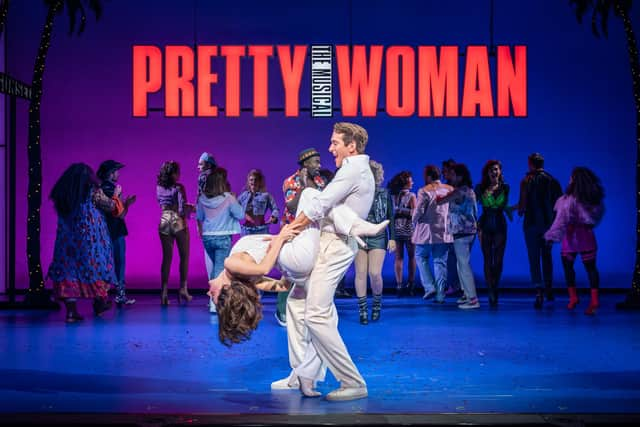
Rather the production makes little effort to bring depth to the characters we already know – and the addition of some forgettable songs, penned by rocker Bryan Adams and shoehorned in wherever there’s space, only serves to jarringly interrupt the pace.
Instead of Roxette, Wild Women Do, or the King of Wishful Thinking, the show introduces a score of bland new musical numbers, none of which provide emotion or even a memorable melody.
Instead Adams’ writing partner Jim Vallance provides us with laborious rhyming lyrics to spell out what might be the characters’ internal thoughts.
“Look at him, he’s rich, he thinks he’s winning / He needs to learn his journey’s just beginning,” lectures Edward’s lawyer Stuckey fatuously in the opening number.
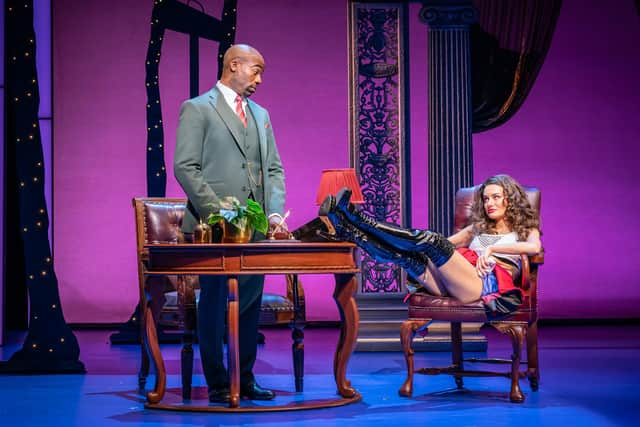
“Now you’ve got me thinking about working on a dream,” muses Vivian having sampled a taste of the high life, before adding vacuously: “I’m not there yet, I’m somewhere in between.”
The criticisms often levelled at Pretty Woman these days – an exploitative gender dynamic; a plot that feels problematic through the prism of 2024 – can be excused in a film that’s almost 35 years old.
Self-consciously, though, the stage show makes clumsy attempts to redress the imbalance.
Vivian is the unlikely victor in the unpleasant fist-fight between she and Stuckey which floored her in the film.
Rather than refer to her as a prostitute (as Edward tells her in the movie, ‘you are, after all, a hooker’) she is labelled instead as ‘a professional’.
In a flimsy bid to redraw her as a strong, independent woman, fellow ‘professional’ Kit suddenly realises she dreams of being a cop – so enlists effortlessly with the LAPD (never mind a rap sheet for soliciting that would surely preclude her).
It doesn’t really matter. Audiences will always flock to a light-hearted evening with familiar characters and nostalgic moments, improved no end by a Prosecco in the interval.
But Pretty Woman’s weak songwriting, and failure to explore its themes, prevent it from coming even close to the iconic status of the original.