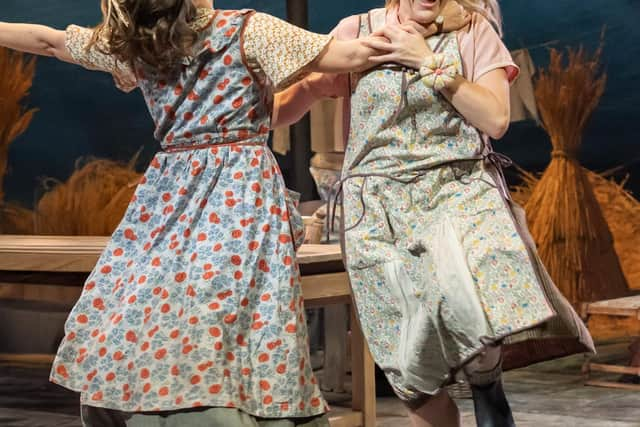
REVIEW: Dancing at Lughnasa, The Crucible, Sheffield
Surprisingly little dancing goes on in Dancing at Lughnasa, Sheffield Theatres’ big opening production for the new Crucible season and new artistic director Elizabeth Newman’s first play in post.
On the surface, surprisingly little goes on of anything at all. Irish playwright Brian Friel’s multi-award-winning 1990 ‘memory play’, narrated through the recollections of now-grown Michael from the summer of 1936 when he was a seven-year-old boy, is a domestic drama where the story takes place almost entirely within the seemingly mundane confines of the Mundy sisters’ humble home in County Donegal.
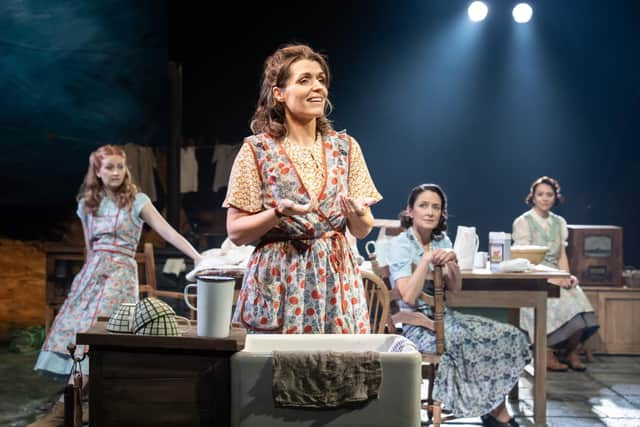

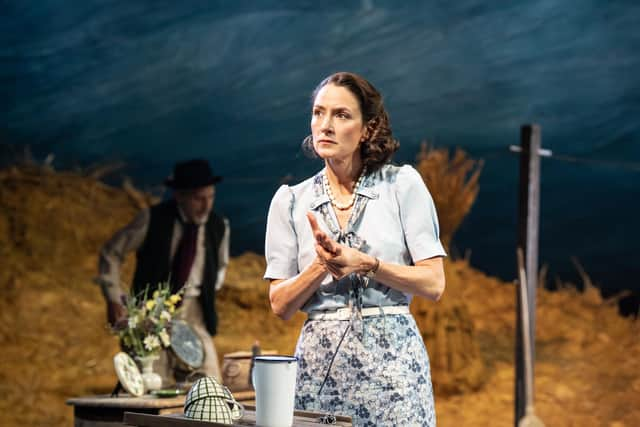
But thanks to Francis O’Connor’s standout set and costume design, Chris Davey’s beautiful lighting, and some deft directorial touches from Newman, that home is without walls – and the outside encroaches in, just as the inside yearns to break free.
Grass grows up the legs of the kitchen chair, and creeps insidiously up the side of the washing-up stand. Celtic swirls of ancient runes etched on the rocks outside are mirrored in the carvings on the wooden sideboard. Sheaves of barley are bound like prisoners in the golden field that slides into the garden beneath a huge harvest moon, against the backdrop of a vivid blue oil painting sky.
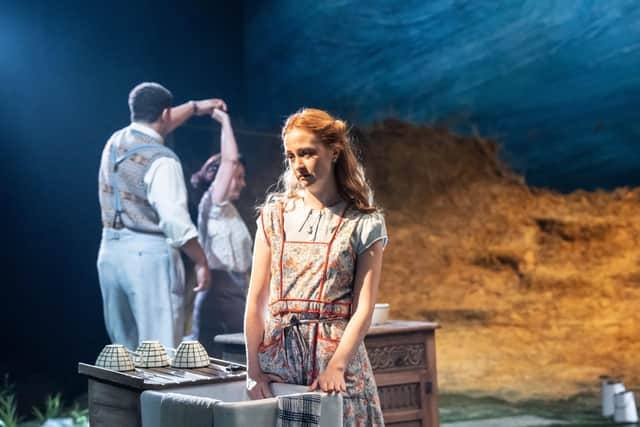
Everything indicates a hazy merging of time and place – of past and present, of duty versus desire, of the looming threat of personal and societal change, of the relevance and reliability of memory at all.
“When I cast my mind back to the summer of 1936, different kinds of memories present themselves to me,” says Michael in his opening lines, as the play recounts poignant recollections of homely detail that both matter enormously, and in the grand scheme of things not at all. The actors stand still, frozen like a tableau in an old photograph, and we are looking back on a moment that is already gone, the sisters’ fates already sealed.
The story, in so far as there is one, isn’t entirely continuous. Rather the play is a series of snapshots that add up to a summer where lives are about to change forever.
Martha Dunlea, Rachel O’Connell, Siobhán O’Kelly, Laura Pyper and Natalie Radmall-Quirke play the five sisters Chris, Rose, Maggie, Agnes and Kate with authentic warmth and real connection, and give the play its heart.
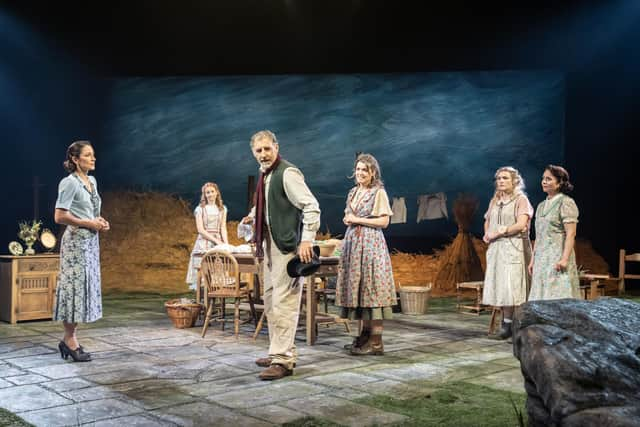
All unmarried, all in their own ways ultimately powerless against the vagaries of men, their lives revolve around scraping together meals for seven with meagre ingredients that would barely stretch to three, and grasping at happiness when and where they can get it – mostly from their unreliable wireless and its unpredictable bursts of song.
There’s another sibling in the household, too: their brother, Jack, just returned from Africa where he has been away for 25 years as a missionary priest.
But in the play as in the sisters’ lives, it’s the men that let the women down. Frank Laverty feels unconvincing as a brother figure, more like an ageing uncle or distant family friend, and though his arrival is the catalyst for much of what is to become, it’s a struggle to care about him as a subplot when the sisters are the story.
Kwaku Fortune plays the adult Michael, but his seven-year-old self is never seen, which makes for some slightly odd moments; his aunt Kate crouching down to an invisible child, cupping his cheeks in thin air to kiss his face, for example.
And Marcus Rutherford is his feckless absent father Gerry – Welsh, apparently, though you’d never guess from the accent – too gentle and lyrical in tone to stir the required feelings of injustice at his inadequacy in Michael and Christina’s lives.
There are poignant moments though, particularly towards the end, during another of Michael’s expositions looking back on his childhood years.
When he explains what became of his aunts Agnes and Rose – destitute in London in the years of ‘no Irish, no blacks, no dogs,’ reduced to silently cleaning public lavatories and the London Underground, sleeping on park benches and succumbed to drink, not one passing commuter caring about their past lives of home and family and proud people who loved them in a bygone country and a bygone time – the script is a tragic echo of the facelessness of migrants today.
- Dancing at Lughnasa is at The Crucible until Saturday, October 4.