
Review: A Streetcar Named Desire, the Crucible, Sheffield
“I don’t want realism; I want magic!” exclaims our antiheroine Blanche DuBois in A Streetcar Named Desire, Sheffield Theatres’ luminous new production at the Crucible all this month – and who can blame her?
Why shouldn’t she have nice things, try to cheer herself with trinkets, when the fast-changing modern world – with people like her brutish brother-in-law Stanley in it – is so ugly and cruel?
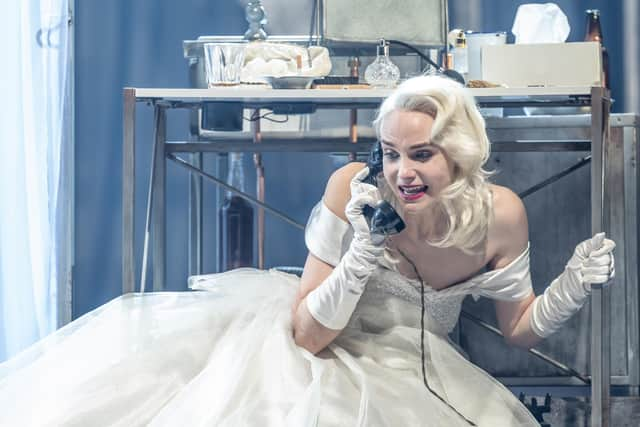

This new production of Tennessee Williams’ stiflingly tense drama has an ethereal air.
The stage is washed in a dreamlike ultraviolet. The sultry heat of a New Orleans summer rises like the steam from the mint green bathtub. The few pieces of sparse scenery make up a simple but suggestive revolving stage, which puts a new spin on an almost 80-year-old parable (plus an ever-changing view for each seat in the house).

Blanche is haunted by the ghost of her late husband who appears to her in every young man she meets. Baby-faced Jack Ofrecio as poor, dead Allan tinkles the soundtrack to her life on an old upright piano, gazes upon her benevolently from the iron balcony, and embraces her with forgiveness through a thin gauze voile – all that separates Blanche’s delusions of grandeur from awful, grinding reality.
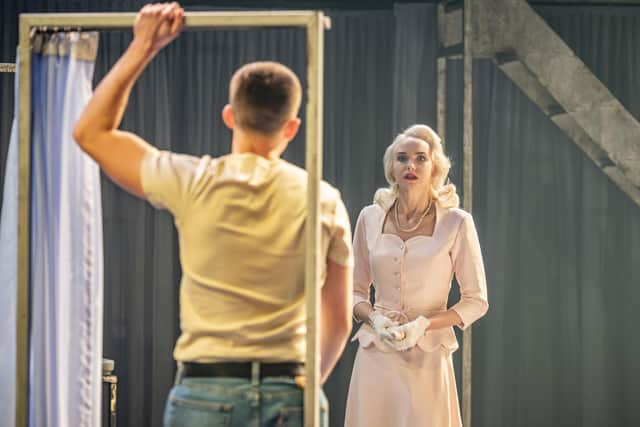
Joanna Vanderham – ice blonde hair, slender frame, pastel pink peplum skirt-suit – is not just perfectly cast as Blanche, she is luminescent.
Blanche adores elegant clothes, clings to old ideals and sensibilities, fishes for compliments even in dirty puddles, quotes poetry and slips into French (as much to point out, imperiously, that she can where others can’t).
In New Orleans to visit her sister Stella, played with warmth, good humour, compassion and some steely grit by Amara Okereke, she meets base, boorish Stanley – and actor Jake Dunn’s character violates her from the off, with slimy sneers and intimidating body language.
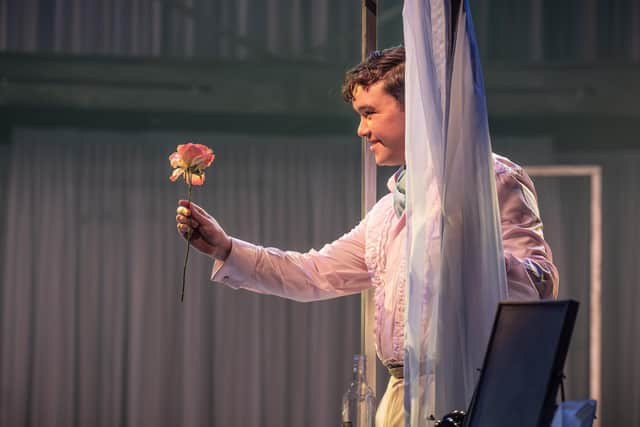
Blanche condemns him as subhuman, a throwback to the Stone Age (yet he’s evolved enough to see through her confection of lies) – though Dunn doesn’t quite have the Brando brawn for that. But what he lacks in physical presence he makes up for in lasciviousness: looks that last that fraction of a second too long, silent licks of the lips that speak violent volumes.
And yet the production presents a moral minefield where judgement must be left at the invisible door to Stella and Stanley’s slummy rented rooms.
Blanche might be a vague and airy fantasist but she’s real enough to know Stella deserves more than this: a beer-swilling husband who picks at his teeth and knocks her around.
Stella might believe herself a realist, but beyond lust she’s deluding herself this meagre married life will do.

Stanley might be merciless, but for all his menace he’s not wrong to find Blanche maddening and ridiculous. She is. She’s a hot mess of heartbreaking contradictions.
A lily white, old money, pre-war relic, she’s a Scarlett O’Hara southern belle, increasingly ludicrous and out of place in a new era New Orleans of second-generation immigrants and inter-racial marriage, where the men wear bowling shirts and the women are beginning to think of liberation.
“But do you want him?” asks Stella of Blanche as she ponders marriage to Mitch, a dull man she doesn’t even desire, and it’s as if she’s never considered the question before.
Blanche and Stanley’s scenes together are one awful, inevitable character assassination as he constantly pick, pick, picks at her, exposing her absurdities as he eventually does her secrets.
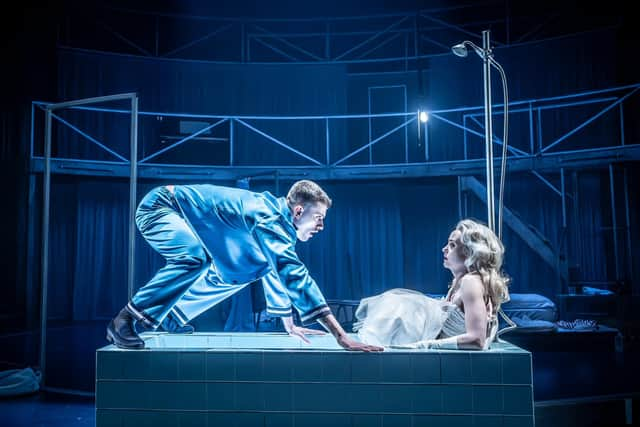
Yet however defiantly delusional, borderline hysterical, downright deranged or not, under Josh Seymour’s direction, and thanks to Vanderham’s exquisite vulnerability, you root for Blanche.
She has a script, stuffed like her monogrammed trunk and her tin of carefully-folded love letters, of iconic one-liners that cry out to be emblazoned on 21st century T-shirts.
“I will not be looked at in this merciless glare!” she proclaims as she prettifies a bare bulb with a cheap paper lantern.
“A woman’s charm is fifty per cent illusion,” she purrs in a perfect Mississippi drawl (both a voice coach and a US dialect coach were employed for the production).
“I’ve brought nice clothes and I’ll wear them” / “A long bath and a cool drink always leave me with a new outlook on life” / and, her last, famous, tragic resignation: “I have always depended on the kindness of strangers.”
As the outer ring of the stage spins with increasing velocity as the play hurtles towards its end, as Blanche’s life spirals out of control, lights fizz and voices reverberate.
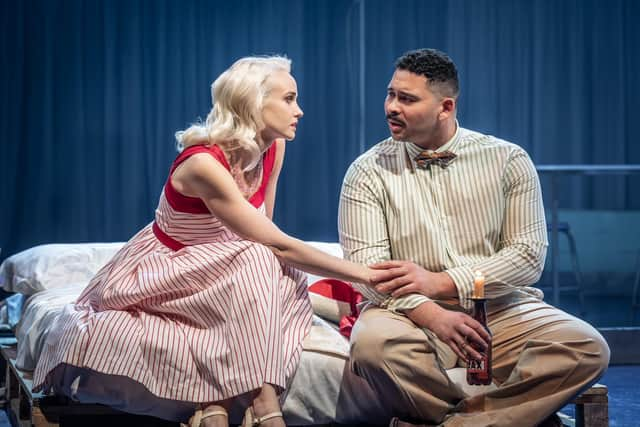
When, at last, her mind is finally broken – and as Vanderham begins to speak in a chilling, dulled monotone as dead as hope itself – so begins a new life of pretence for Stella.
Stella knows full well what her horrible husband is capable of, and she doesn’t even have a cheap glittering rhinestone tiara to make up for it.
- A Streetcar Named Desire is at the Crucible Theatre until Saturday, March 29
- RELATED: REVIEW: Waitress at the Lyceum, Sheffield
- RELATED: The Rosadocs will be first band to headline re-opening of O2 Academy in 2027 (aff)
- RELATED: Big name national book chai hiring staff for newest Sheffield store
- RELATED: Sheffield technician cracks 1,600-year-old mystery to replicate Roman masterpiece