
New Jerusalem Gospel Church: Cancer Awareness Workshop
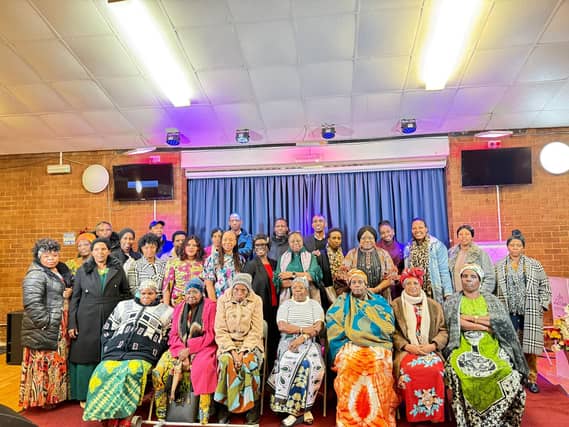

New Jerusalem Gospel Church (https://njgchurch.uk/) held a one-day workshop to raise awareness about Cancer Among Black African Women and Minority Ethnic Groups.
ExCo
New Jerusalem Gospel Church extends its gratitude to Sheffield City Council (Park and Arbourthorne Ward) for providing financial support and to African Caribbean Cancer Support (ACCS: https://accancersupport.org.uk/) for facilitating the role and bringing in expertise and lived experiences.
The cancer awareness workshop stressed understanding its types, symptoms, the importance of early diagnosis, and the influence of cultures and faith. The discussion also covered how to access support within Sheffield. The workshop took place at the following address: 550 East Bank Road, Sheffield, S22AL, from 2-5.30 pm. 35 women from the church and surrounding communities fully attended the workshop, while 5 men participated intermittently.
Workshop rationale
New Jerusalem Gospel Church is a charity and Christian church based in Sheffield. The charity was formally registered in May 2023 (reg no: 1203332). The church has around 217 members, including children and the majority settled in the UK from the African Great Lakes region, the Democratic Republic of Congo, Rwanda and Burundi.
The charity's main mission is to proclaim the gospel, and it aims to spiritually and socially support members and communities to overcome challenges and barriers they inherited due to their backgrounds. As part of its objectives, the church runs sessions to learn about members’ experiences and understand their needs. Members’ background is rich in different experiences that explain why women raised this need to organise a debate around cancer.
The one-day workshop was intended to involve and give space to women, members of the church and other participants from communities around. The Women’s Cancer Awareness Workshop aimed at improving understanding, early diagnosis, and open dialogue among participants about cancer among Black-African women and women from other minority ethnic groups. Recent research shows that Black-African women and women from minority ethnic groups in the UK are diagnosed with cancers at a late stage compared to others. Research indicates that culture and lack of information are among the challenges that make black and Caribbean women in the UK face such disparities
In their introductory remarks, Rev. Justin Ruvimba, NJGC’s senior pastor and Aperi Nyamahoro, the Chairperson of NJGC Women’s Department, thanked everyone who attended the workshop. Based on worldwide statistics, Rev Justin Ruvimba underscored how Cancer kills millions across the globe and in the United Kingdom. Both speakers highlighted the need to enhance knowledge about Cancer as its early diagnosis can facilitate treatment. Rev. Justin acknowledged the financial support provided by Sheffield City Council as well as the presence and role played by ACCS presenters and facilitators.
Cancer Awareness Presentation
Topic 1: Types of cancer, symptoms and early diagnosis among Black-African women and women from minority ethnic groups.
The presentation was delivered by Rev. Abi Alabede, who is a Minister in the City of Refuge Foursquare Church and a retired oncology nurse from Weston Park Cancer Hospital.
Rev. Abi provided a clear and practical overview of cancer, its forms, and the importance of early diagnosis. Her presentation focused on breast and cervical cancers. She explained how cancer begins when abnormal cells multiply uncontrollably, forming tumours that may spread to other parts of the body. She underlines that over 200 cancer types exist, grouped broadly into carcinomas, sarcomas, leukaemias, lymphomas/myeloma, and cancers of the brain or spinal cord.
Rev. Abi noted that Breast cancer is common among women, but it can also affect men. Breast Cancer is highly viewed as a major concern among women. Experiences and research show that Breast Cancer typically begins in the milk ducts or lobules and may be invasive or non-invasive. Invasive forms include ductal, lobular, and inflammatory breast cancers, while non-invasive types include DCIS and LCIS. She also highlighted the triple-negative breast cancer, known for its aggressive nature.
The key symptoms include lumps, changes in breast shape or skin, nipple discharge, and persistent pain. Although most lumps are benign, Rev. Abi’s presentation stresses the importance of seeking medical advice promptly. The reason for seeking prompt and early diagnosis is that it gives an effective pathway to successful treatment.
Regular breast screening through mammograms—offered every three years to women aged 50–70—along with personal breast checks, can significantly improve outcomes. Lifestyle choices such as maintaining a healthy weight, exercising, reducing alcohol intake, avoiding smoking, and breastfeeding can help lower the risk of contracting breast cancer. She also addressed genetic factors, especially BRCA1 and BRCA2 mutations, as part of the causes of cancer.
Rev. Abi’s presentation covered cervical cancer, which develops from abnormal cells in the cervix. cervical cancer is strongly linked to high-risk HPV infection. Symptoms include unusual bleeding, painful sex, pelvic pain, and unpleasant discharge. Early detection through cervical screening (HPV test and Pap smear), vaccination for adolescents, and prompt treatment of abnormal cells greatly reduces risk. Maintaining good health and attending screening appointments are essential preventive measures.
For the sake of creating a safe space for women, men were asked to leave the workshop after the first presentation.
Topic 2: Cultural Perceptions, Faith, and Support Systems in Cancer Care
The second presentation led by Dr Chinny and her colleagues stressed on barriers created by cultures, faith and challenges to know who to turn to when facing cancer among Black-African and Caribbean women. Speakers reflected on how cancer remains a leading health challenge within these communities. Cancer is sometimes associated with stigma, misinformation, and barriers to accessing health facilities because of language barriers.
Speakers noted that despite improvements in public awareness, Black-African and minority ethnic women continue to face later diagnoses for cancers such as breast, cervical, and ovarian cancer, and that is why there should be more spaces to talk about it. Speakers underlined that factors contributing to later diagnosis include, and are not limited to, lack of awareness and knowledge of cancer symptoms, fear of medical procedures, mistrust of healthcare systems, and cultural beliefs that discourage open discussions about illness.
- Group work and discussion
Before presentations (topic 1), participants were asked (quiz) to list two types of cancer they know and their symptoms. In the pre-presentation quiz, most of the participants referred to breast cancer as the one they knew. After the presentations and Q&A, participants worked in small groups to discuss symptoms and diagnosis, cultural perceptions and where to find support. Participants were able to list more types of cancer and symptoms as compared to the pre-presentation quiz. Moreover, it emerged that participants were of the view that cancer meant simply that someone is about to die.
During the group work and discussion, facilitators offered time to illustrate and show participants how to check their bodies. Some used private rooms to check where symptoms are likely to appear on the body. Particularly, testimonies from cancer survivors (ACCS facilitators) were highly emotional. Their personal stories and experiences were powerful and encouraging. They shared how early diagnosis can save lives. Next to public and organisational support, facilitators emphasised that it’s vital to find family and community care. Participants, including men, expressed an interest to learn more about cancer, specifically Prostate but time ran out, and there was no possibility to keep the conversation going.
Conclusion
As a takeaway, participants understood that early diagnosis saves lives. They acknowledged that cancer does not mean a death sentence. They grasped that the body speaks and one should listen to it. It is important to familiarise ourselves with our bodies, as it helps to ascertain when something changes. The Bible encourages us to use our knowledge and wisdom to tackle challenges we face. Therefore, faith and medicine can work hand in hand. Participants agreed that myths and taboos are dangerous when it comes to preventing cancer.
Participants committed to sharing information with friends and families to break the silence around cancer. They were encouraged to challenge cultural taboos that hinder early diagnosis. The New Jerusalem Gospel Church reaffirmed its commitment to ongoing community health education and mostly Black-African and minority ethnic women. The church will continue to seek partnerships to raise awareness about cancer.